Afarand Scholarly Publishing Institute
Search Afarand journals



BibTeX | RIS | EndNote | Medlars | ProCite | Reference Manager | RefWorks
Send citation to:


URL: http://daneshafarand.org/article-1-86682-en.html
Introduction
With the growth of urbanization worldwide, urban transportation systems play an important role, particularly with regard to traffic generation, energy consumption, and air quality. Unplanned urban development and the rapid spread of motor vehicles have led to the formation of transportation systems that are unsustainable from economic, social, and environmental perspectives. Today, transit-oriented development (TOD) is recognized as a successful strategy for the development of metropolises. This approach originated in the United States in the 1990s, where it was accepted as a rational and feasible form of development [Said, 2018]. Calthorpe, a member of the environmental sustainability movement, extended the transit-oriented development approach to achieve the ecology of communities [Calthorpe, 1993]. According to the definition of transit-oriented development planning, it promotes walkability, cycling, and the use of public transportation instead of private cars, and seeks to direct urban development as much as possible around public transportation stations and to create high-density communities with diverse land uses and functions [Vega et al., 2023]. This approach increases economic productivity and raises the value of adjacent properties [Fang, 2023]. Its principles have been introduced as density, diversity, design, accessibility, and distance to public transit [Cervero & Ewing, 2010]. In Iran, too, air pollution, traffic, and other consequences of car dependence are fundamental challenges. Transit-oriented development is considered a new approach in Iran; it was raised in the late 2000s, and studies on it have been carried out in universities and research centers. Despite the efforts made in this regard, many problems still exist in urban planning and design based on this approach [Karimi Rahnama et al., 2021].
The literature on transit-oriented development at the international level, with numerous sources, is searchable and accessible to researchers, but at the domestic level it faces limitations. Studies in Europe and Asia explicitly introduce “geographical location” as one of the key factors creating variation in estimates and take it into account in their analyses. In other words, the article confirms that the estimated results for land and property values show significant differences depending on the geographical region (Asia or Europe) in which the study was conducted [Mohammad et al., 2013]. In one study, researchers identified the key factors affecting the success of transit-oriented development using meta-analysis. Through a systematic review of the existing literature and analysis of 49 data points extracted from 25 articles in America, Europe, Asia, and Australia, they tried to examine the effect of various factors on green travel (including walking, cycling, and public transportation) as an indicator of the success of transit-oriented development. The results showed that built-environment factors (especially walkability and parking restrictions) are among the most important factors affecting the success of transit-oriented development. A comparison of the results across four continents showed that the uniqueness of each region (including culture, history, policies, and level of development) means that the mere effect of “geographical location” cannot easily be generalized; in other words, differences in the results are mostly due to the local context [Yen et al., 2024]. In addition, a systematic review of TOD conducted in Egypt, while presenting a systematic analysis of the scientific literature, addresses the importance of the concept of transit-oriented development and recommends that planners revalidate the principles of transit-oriented development planning, evaluate various transit-oriented development programs, and adapt them to local contexts [Ibrahim et al., 2022]. In a systematic review, researchers integrated research on transit-oriented development with a special focus on economic development and sustainability in urban contexts. This review addressed aspects related to sustainable urban growth and established the link between transportation planning and economic development. The results provided a rich understanding of how transit-oriented development approaches strengthen economic resilience, urban vitality, and sustainable growth [Sharma & Dehalwar, 2026]. Also, in a study based on scientometric analysis, 507 articles from the Web of Science in the period 1996–2021 were collected and visually analyzed. The findings revealed highly co-cited documents that were categorized into four groups of transit-oriented development studies: 1) the impact of transit-oriented development planning factors on transportation benefits; 2) typology, classification, and evaluation; 3) contexts, experiences, problems, and solutions; and 4) transit-oriented development, transit proximity, and housing value [Sun et al., 2022]. A summary of the foreign research background shows that understanding the concept of transit-oriented development has been a frequent topic in previous studies; moreover, the concept of the transit-oriented development approach in developed Western countries such as the United States differs markedly from that in Eastern countries such as China and India.
A review of the domestic research background shows studies reflecting researchers’ efforts to identify the obstacles to implementing transit-oriented development in Iran. For example, some researchers emphasize the need to pay attention to comfort and tranquility in public transportation [Nastaran et al., 2018], policy change [Maboodi et al., 2020], attention to an audience-oriented perspective [Kameli, 2024], and the provision of resources at public transportation stations [Nazarpour et al., 2018]. Removing these obstacles requires an accurate understanding of the current state of this field in Iran. The systematic examination and explanation of human-centered transportation planning falls into this category; according to its results, most studies have been conducted with an applied and descriptive-analytical approach, while less attention has been paid to theoretical dimensions and the process of theorizing [Farnad et al., 2025]. Other researchers have recommended the need to identify areas prone to transit-oriented development in the public transportation network [Ezatian et al., 2025]. Likewise, research evaluating the potential of transit-oriented development in deteriorated urban fabric, in order to achieve a desirable approach to organizing such fabric, falls into this category; according to its results, the implementation of the transit-oriented development approach can lead to the renewal and consolidation of deteriorated fabrics [Nojoomi et al., 2025]. Another systematic review examined 1,472 studies that had published evidence on co-opetition strategy in the transportation industry between 1995 and 2021. The findings show that the capital intensity of the transportation industry pushes companies toward adopting a co-opetition strategy [Abbaspour et al., 2021]. Another group of domestic studies was based on the conceptualization of transit-oriented development and the evaluation of its principles and components in a specific area. For example, in a study explaining the concept of public-transit-based development and the criteria for determining its centers in Line 1 of the Shiraz metro, two criteria, “level of development” and “urban location”, were introduced as criteria for identifying stations that can be converted into transit-oriented development centers, and within the same framework, the stations of Shiraz Metro Line 1 were analyzed in relation to the urban form [Alialhessabi & Moradi, 2010]. In one article, researchers, after briefly introducing transit-oriented development, evaluated transit-oriented development indicators in the neighborhoods of Isfahan with a spatial justice approach. The results of the indicator analysis make it possible to identify underprivileged neighborhoods and to set priorities for the development of urban transportation infrastructure [Baharestani Yazdi & Maleki, 2025]. What has so far led a considerable number of citizens not to use the urban rail system has been inadequate quality and the lack of sufficient comfort at stations. The stations are in relatively good condition in terms of transportation indicators, but they have not performed well in artistic, perceptual, and psychological terms. According to the results, the priorities for upgrading and organizing the Iran University of Science and Technology metro station were mostly related to two factors: accessibility and aesthetics. Although the metro has been used by citizens in Tehran as a means of mobility for nearly two decades, the effects of the development of metro lines on reducing people’s dependence on private vehicles have not yet become tangible as they should. In this regard, improving the quality and siting of metro stations can make a considerable contribution to encouraging people to use the metro [Haghi et al., 2020].
Today, one of the most common ways of evaluating scientific products is the use of scientometric methods. Most scientometric indicators were developed to examine the quantity of scientific output, such as the number of articles and the number of articles published over a period of time. The publication of articles in scientific journals is regarded as the main feature of research work; accordingly, providing statistics and information on scientific publications is among the most important functions of scientometric specialists [Erar, 2000]. A review of the research background since the concept of transit-oriented development entered Iran shows a marked thematic dispersion and a theoretical gap resulting from the lack of thematic classification of domestic research. Consequently, the implementation of this new approach in the country has been unsuccessful. Laying the groundwork for its implementation requires the production of indigenous knowledge. The current state of this approach in the country is ambiguous for researchers because of its thematic dispersion. Hence, the necessity and importance of research to understand the trend of scientific output within the country and to analyze its topics holistically, which has not yet been addressed, becomes clear. The difference between the present study and previous studies lies in its integrated examination of scientific outputs and the grouping of their main concepts, filling the theoretical gap, and providing new insight to planners and urban managers regarding the status of the transit-oriented development approach in the country. The aim of this article was to examine and analyze the content of the scientific outputs of 20 years of the transit-oriented development approach in Iran.
Methodology
The present scientometric article was conducted in 2023 using a systematic review and content analysis. Data were collected through document observation. The data collection instrument was a researcher-developed list whose validity was confirmed by experts in transportation and urban planning who were purposively selected. To select the databases and the scope of the study, the databases of domestic research were first examined. Owing to their age and history in the country, comprehensiveness, up-to-dateness, and open access, the Scientific Information Database of ACECR (SID) was selected for searching articles, the Iranian Research Institute for Information Science and Technology (IranDoc) for master’s theses and doctoral dissertations, and the system of the National Library and Archives of Iran for searching books.
The keyword search criteria were similar to those of comparable studies [Sari et al., 2023; Jain et al., 2020; Jamme et al., 2019], and the keywords “transit-oriented development” and “TOD” were used in titles and keywords. The eligibility criteria for selecting studies included research printed and published in domestic journals, a subject related to transit-oriented development, having at least one of the keywords in the title or keywords, open access, the Persian language, and a publication year from the entry of the concept of transit-oriented development into Iran, i.e., 2003, to 2023. The exclusion criteria were unrelated subjects, duplicate titles obtained from the three databases, and duplicate results arising from overlapping keywords. In the initial keyword search, 587 research titles were extracted. After review and removal, 193 Persian scientific outputs (116 theses, 67 articles, and 10 books) were selected, and by screening the list of frequently occurring research works, 61 selected works focusing on station studies were chosen. Since the data search was conducted in domestic databases and on Persian-language texts, there were limitations in choosing software; therefore, Excel 2022 and MaxQda 2020 were used for content analysis and for drawing figures of the thematic fields. Next, to determine which topics the articles addressed, similar English-language foreign sources were studied, and a thematic plan for classifying the studies was obtained. Then a database of the selected studies was created in Excel and analyzed by content analysis with an inductive approach [Kondracki et al., 2002]. Coding of the main concepts and examination of the studies were conducted across four dimensions: time, degree of indexing of the studies, thematic field, and mainstream of studies. Validity was assessed by three urban planning experts. The reliability of the research was established through inter-coder agreement; that is, another coder coded the documents, and the coding was compared with the researcher’s coding until agreement was reached. Finally, the data recorded in MaxQda were coded through open and axial coding, and the frequency of each was reported and interpreted.
Findings
The growth of scientific output on transit-oriented development was very low from 2003, and from 2010 to 2016 it had an almost uniform trend. From that year onward, however, it took an upward trend, and up to 2023 a total of 193 scientific outputs were published. The highest frequency of scientific output belonged to 2020 and the lowest to 2003. Moreover, the trend has been decreasing in recent years, which is a matter for reflection (Figure 1).
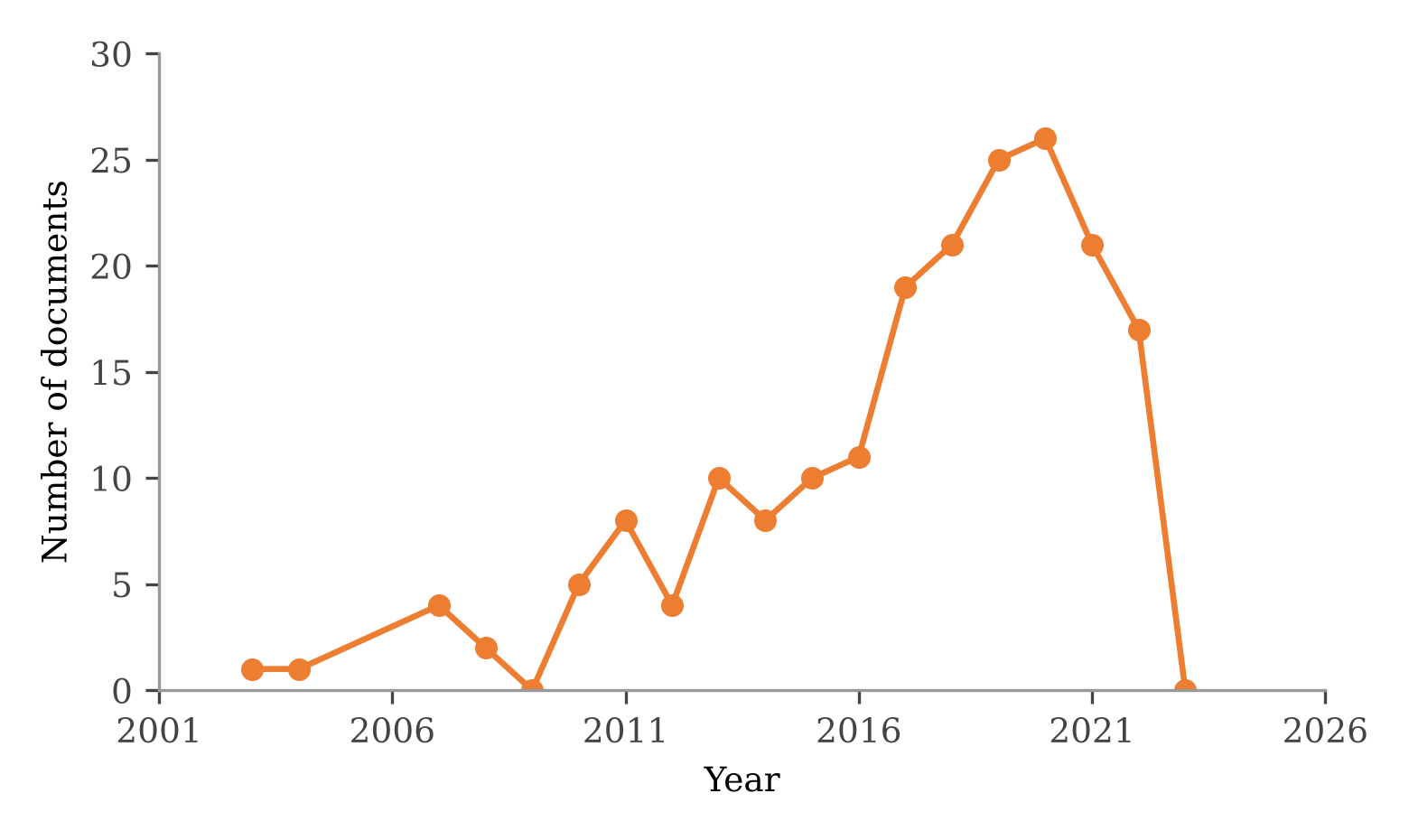
Figure 1) Time trend of transit-oriented development studies indexed in domestic databases in the period 2003–2023
The publication of books on transit-oriented development in Iran began in 2016 and, with a pause in 2019, continued to grow afterward (Figure 2).
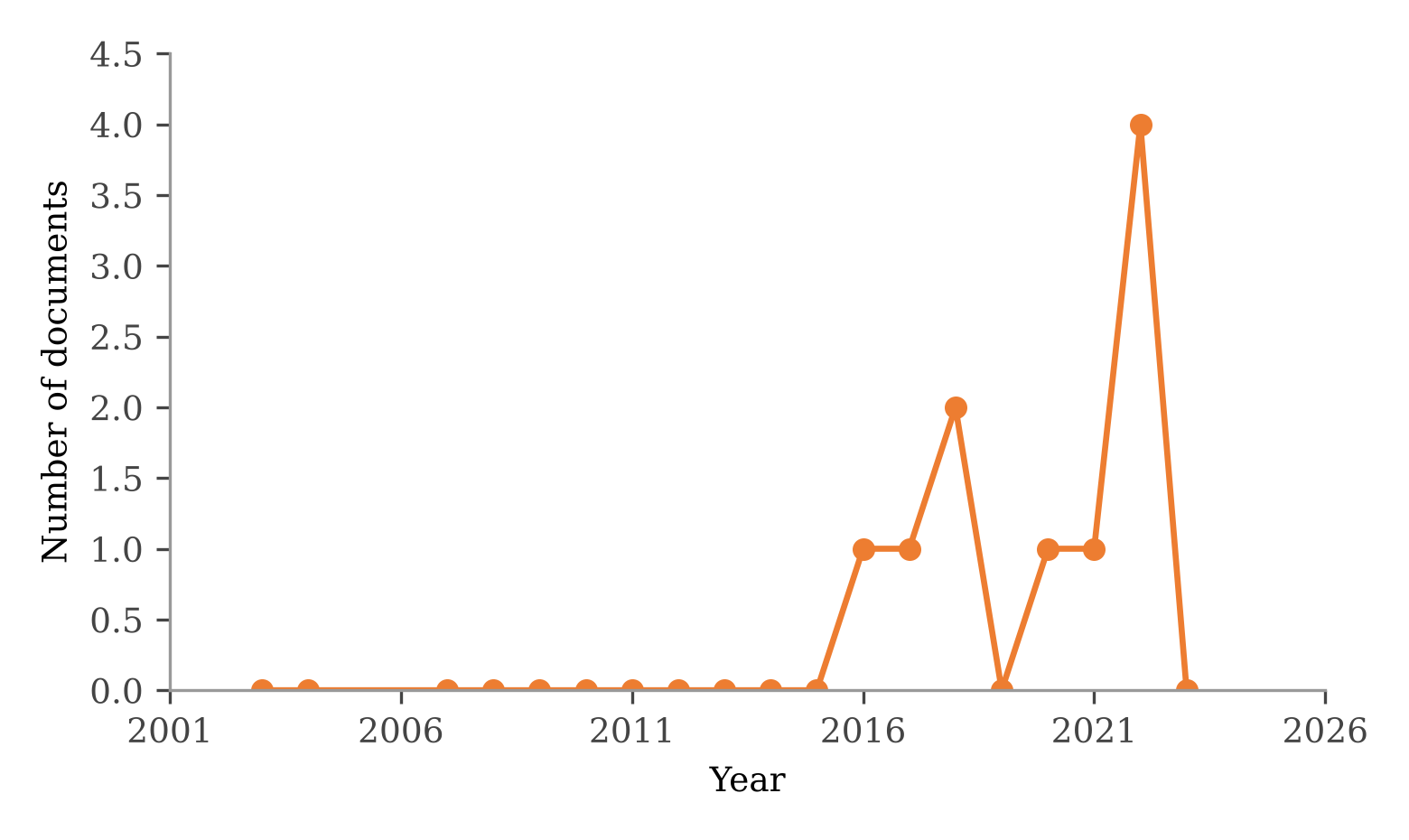
Figure 2) Time trend of books indexed in the system of the National Library and Archives of Iran on the transit-oriented development approach in the period 2003–2023
After coding and categorizing the data in MaxQda, 293 initial codes were extracted, and with the opinion of three academic experts they were grouped into 20 secondary codes and then into three categories: implementation (52 codes), theoretical principles and foundations (219 codes), and sustainable development and environmental topics (22 codes). In the published books, economic, financial, management, and planning topics of transit-oriented development received attention. In the articles, the topics of land use and density (16 codes) and issues around stations and station complexes (16 codes) received the most attention, and in the theses, issues around stations and station complexes (48 codes) and the principles, criteria, and indicators of transit-oriented development (29 codes) received the most attention (Table 1).
Table 1) Classification of the extracted codes based on the characteristics of the examined documents (n=61)
| Category | Secondary code | Article | Thesis | Book | Total |
|---|---|---|---|---|---|
| Implementation | Feasibility and adaptation | 6 | 9 | 0 | 15 |
| Prioritization of site selection | 4 | 9 | 0 | 13 | |
| Implementation and realizability | 2 | 4 | 2 | 8 | |
| Futures studies and scenarios | 8 | 2 | 0 | 10 | |
| Challenges, benefits, and requirements | 5 | 1 | 0 | 6 | |
| Theoretical topics | Concepts | 3 | 1 | 0 | 4 |
| Principles, criteria, and indicators | 13 | 29 | 2 | 44 | |
| Stations and station complexes | 16 | 48 | 0 | 64 | |
| Policy | 3 | 2 | 0 | 5 | |
| Planning and management | 2 | 20 | 3 | 25 | |
| Street accessibility | 3 | 7 | 0 | 10 | |
| Justice | 2 | 0 | 0 | 2 | |
| Quality | 0 | 6 | 0 | 6 | |
| Land use and density | 16 | 16 | 1 | 33 | |
| Urban spatial structure | 5 | 10 | 1 | 16 | |
| Deteriorated fabric | 0 | 3 | 0 | 3 | |
| Tourism and suburbs | 0 | 2 | 0 | 2 | |
| Housing | 1 | 0 | 1 | 2 | |
| Economy/finance | 0 | 0 | 3 | 3 | |
| Environmental | Sustainable development, environment, and energy | 11 | 10 | 1 | 22 |
Table 2) Classification of the main themes of the selected documents examined (n=61)
| No. | Document | Document feature | Result | Main theme |
|---|---|---|---|---|
| 1 | [Askari Tafreshi et al., 2009] | Metro station | Land use planning of the station | Planning (13%) |
| 2 | [Shamsali, 2008] | Metro station | Spatial planning around the station | |
| 3 | [Rafieiyan et al., 2010] | Metro station | Land use planning of the station | |
| 4 | [Akbari et al., 2011] | Metro station | Land use planning of the station | |
| 5 | [Fatahian & Nouraei, 2021] | Metro station | Strategic planning and participatory development | |
| 6 | [Khatib-Semnani et al., 2020] | Metro station | Strategic planning | |
| 7 | [Dehghan Tanha & Mousakhani, 2014] | Urban rail station | Prioritization of stations | |
| 8 | [Sabouri & Azizi, 2016] | Metro station | Planning the spatial order of lands around the station | |
| 9 | [Omidi & Saremi, 2019] | Metro station | Evaluation of density and land use mix around the station | Evaluation and impact measurement (41%) |
| 10 | [Abbasi et al., 2021] | Metro station | Evaluation of parking uses around the station | |
| 11 | [Rafieiyan & Asgari Tafreshi, 2009] | Metro station | Evaluation of the land supply pattern | |
| 12 | [Abbaszadegan et al., 2010] | Metro station | Measuring residential satisfaction in station neighborhoods | |
| 13 | [Nouri Payam & Nourian, 2010] | Metro station | Trend of physical-spatial changes caused by the establishment of stations | |
| 14 | [Hamzelo & Khameh, 2013] | Station complexes | Measuring the role of station complexes | |
| 15 | [Jafari, 2013] | Metro station | Evaluation of benefits and challenges around the station | |
| 16 | [Khalili et al., 2013] | Metro station | Measuring user satisfaction at stations | |
| 17 | [Momeni & Nourian, 2014] | Metro station | Evaluation of the role of urban management | |
| 18 | [Moradi et al., 2015] | Public transport station | Evaluation of the role of stations | |
| 19 | [Zabihi et al., 2016] | Station complexes | Evaluation of the role of the station complex | |
| 20 | [Pasban et al., 2017] | Urban rail station | Evaluation of physical expansion | |
| 21 | [Shahabyan & Asadi, 2017] | Station complexes | Measuring the degree of realization | |
| 22 | [Asadi & Shahabian, 2017] | Metro station | Evaluation of walkability | |
| 23 | [Khosravi & Soltani, 2018] | Urban rail station | Evaluation of the fabric around the station | |
| 24 | [Bokharaei Najafi et al., 2018] | Public transport station | Measuring the degree of realization | |
| 25 | [Aghili et al., 2018] | Urban rail station | Measuring the impact of land uses | |
| 26 | [Abdi et al., 2019] | Urban rail station | Evaluation of the zone around the station | |
| 27 | [Shirvani et al., 2019] | Urban rail station | Evaluation of the zone around the station | |
| 28 | [Hassani et al., 2019] | Metro station | Evaluation of adaptability around the station | |
| 29 | [Haghbin et al., 2019] | Metro station | Measuring improvement of quality of life around the station | |
| 30 | [Asayesh et al., 2021] | Metro station | Measuring the social and traffic impacts of the station | |
| 31 | [Khorasani & Mirbaha, 2021] | Public transport station | Measuring the impact of passengers’ behavior on access to the station | |
| 32 | [Sadeghi et al., 2022] | Urban rail station | Evaluation of the fabric around the station | |
| 33 | [Daraei Kortvij et al., 2022] | Urban rail station | Measuring the impact on businesses around the station | |
| 34 | [Naseri et al., 2010] | Metro station | Land use and property value around the station | Economic affairs (3%) |
| 35 | [Ghodousi & Moeini, 2018] | Metro station | Investment incentives around the station | |
| 36 | [Tavakoli Sayej et al., 2019] | Public transport station | Prioritization of walkability around the station | Prioritization (7%) |
| 37 | [Alikhani et al., 2016] | Metro station | Prioritization of walkability around the station | |
| 38 | [Akbari & Shali, 2020] | Metro station | Prioritization of stations | |
| 39 | [Afandizadeh & Shariat, 2013] | Metro station | Site selection of stations | Feasibility and site selection (8%) |
| 40 | [Saedi & Baghdadi, 2015] | Station complexes | Feasibility of creating station complexes | |
| 41 | [Bahrami et al., 2015] | Station complexes | Site selection of station complexes | |
| 42 | [Alipour et al., 2016] | Metro station | Feasibility of building density around the station | |
| 43 | [Chapardar & Rafieian, 2023] | Metro station | Feasibility of station development | |
| 44 | [Saatiyan et al., 2010] | Metro station | Design of the urban structure around the station | Design and spatial organization (28%) |
| 45 | [Shahdoosti et al., 2011] | Station complexes | Organization of station complexes | |
| 46 | [Rabiei et al., 2012] | Metro station | Design around the station | |
| 47 | [Mirzadeh & Mazaheri, 2012] | Metro station | Organization of land use around the station | |
| 48 | [Khobiyari & Hajipour, 2014] | Metro station | Design around the station | |
| 49 | [Charmforoush & Mahmoudinejad, 2015] | Station complexes | Design of station complexes | |
| 50 | [Afshar et al., 2016] | Metro station | Organization of the area around the station | |
| 51 | [Shadab Mehr et al., 2017] | Public transport station | Station design | |
| 52 | [Baghjeri et al., 2018] | Metro station | Organization of space around the station | |
| 53 | [Valipour & Shokouhi, 2019] | Metro station | Organization of space around the station | |
| 54 | [Amadeh et al., 2020] | Urban rail station | Station design | |
| 55 | [Rasouli & Shokouhi, 2020] | Metro station | Organization of the area around the station | |
| 56 | [Al-Sayegh & Khosravi, 2021] | Metro station | Station design | |
| 57 | [Charkhandeh et al., 2021] | Station complexes | Design of station complexes | |
| 58 | [Eskandarian et al., 2021] | Metro station | Organization of space around the station | |
| 59 | [Namjou & Behzadfar, 2022] | Station complexes | Design of station complexes | |
| 60 | [Rasouli et al., 2022] | Metro station | Organization of space around the station | |
| 61 | [Kheyroddin et al., 2013] | Metro station | Station-based spatial development |
The main themes of station-based research on the transit-oriented development approach were classified into six groups: evaluation and impact measurement (41%), economic affairs (3%), prioritization (7%), planning (13%), feasibility and site selection (8%), and design and spatial organization (28%) (Table 2).
For sensitivity analysis, the codes of the results were reviewed in Excel. The codes related to public transportation stations were divided into two sub-codes, “metro stations” and “bus stations”, which led to the identification of new patterns regarding design priorities and access to stations; however, the overall results regarding the importance of stations within the framework of theoretical principles and criteria did not change. In addition, to examine the sensitivity of the results, 10% of the codes related to public transportation stations were randomly removed. This change caused a slight decrease in the frequency of codes related to stations but had no significant effect on the overall results.
Discussion
The aim of the present study was to examine and analyze the content of the scientific outputs of 20 years of the transit-oriented development approach in Iran. Achieving the research objective required a holistic and systematic view of urban issues. Using the results of scientometric findings can have remarkable economic, social, political, scientific, and cultural impacts [Chakoli, 2012]. The thematic field of the examined documents was similar to that of foreign studies in this field [Sun et al., 2022] and to domestic studies on the impact of transit-oriented development on tourism development [Seifipour et al., 2022], justice [Ahadi et al., 2024], and housing development [Movahed & Sheikhi, 2020]. The findings of this research are consistent with the successful experiences of Western (American) and Eastern countries such as Egypt in the field of transit-oriented development. This shows the possibility for Iran to model itself on these countries in order to improve its public transportation system, drawing on the experiences of American versions of transit-oriented development as a guide in developing its own transit-oriented development models.
The differences in the findings of this research can be discussed in that, according to the results of the study by Thomas et al. [Thomas et al., 2018], although the general principles of transit-oriented development are universal, its successful implementation requires adaptation to local conditions. It was confirmed that there are differences in Iran, and a theoretical gap was evident in topics linking transit-oriented development with tourism, justice, and housing; attention to them is recommended in future studies. Accordingly, some of the current transit-oriented development policies in Iran need to be revised in order to provide various types of housing in terms of density and cost. On the other hand, in comparison with the study by Badaruddin et al. [Badaruddin et al., 2025], who examined the role of housing provision in achieving sustainable development goals, the successful implementation of transit-oriented development requires serious government intervention through policymaking, land provision, and incentives, and special attention to the provision of affordable housing to prevent the displacement of low-income residents. Also, in comparison with the study by Rahmani et al. [Rahmani et al., 2020], basing the comprehensive urban plan on transit-oriented development, as a solution for realizing transit-oriented development, is regarded as “a type of urbanism”.
Domestic Iranian research of the type “the concept of transit-oriented development at the station level” was confirmed. However, with regard to the main concepts of transit-oriented development as “a type of urbanism” and a way of living focused on social life, as well as “self-sufficient housing development”, a theoretical gap is felt, and attention to them is recommended. Studies of the transit-oriented development approach around stations and station complexes were the most numerous studies in Iran. In practice, however, transit-oriented development stations in Iran have not developed as they should, they lack the characteristics of station complexes, and extensive changes in their spatial structures are needed [Hosseini et al., 2023], because the mainstream of station-based research focused on evaluating and measuring impacts in the current situation (41%). Although attention to studies of public transportation stations is a necessary condition for realizing the transit-oriented development approach, it is not a sufficient condition, and more applied studies are needed. For example, Tavakoli et al. [Tavakoli et al., 2025] believe that, in both the short and long term, the green financing index has a positive effect on the value added of the transportation sector; therefore, the shortage of budget and financial resources is one of the main obstacles in this area, which requires the attention of policymakers.
In terms of the time trend, although the overall trend of transit-oriented development studies in Iran was upward, it has been decreasing since 2020. The reasons for this require a separate study, but it may stem from a lack of awareness among researchers and urban planners about the benefits of transit-oriented development, the car-oriented culture and low willingness to use public transportation in Iran, or the lack of successful domestic models and declining motivation among researchers. On the other hand, the publication of books on the transit-oriented development approach in Iran began in 2016 with translations of foreign books, and the first authored book was published in 2018, whereas the topic of the transit-oriented development approach had been raised in Iran since 2001. The reviews indicate a delay in authors’ familiarity with this new approach. In this regard, in order to help localize and adapt the transit-oriented development approach to local conditions, similar to the study by Thomas et al. [Thomas et al., 2018], greater effort by researchers to increase the authoring of books on the transit-oriented development approach, rather than translating books, is recommended. In terms of the degree of indexing of research, according to the findings, the coverage of the Scientific Information Database of ACECR is not sufficient for the scientific output on transit-oriented development and does not allow research in this field to be examined effectively; moreover, it was not possible to export the results as a list. Therefore, a review and upgrade of this scientific database is recommended. In the present study, the systematic review of transit-oriented development studies in China and India, as Eastern and developing countries, and the similarities of those studies with Iran were examined. Among the limitations of the research is the limited systematic review of transit-oriented development in Muslim countries with characteristics similar to Iran; therefore, comparative studies with Muslim countries similar to Iran are recommended. The practical recommendation for urban managers and policymakers, in order to improve efficiency at public transportation stations, is to implement programs to improve station design, increase the safety and well-being of users, and create better accessibility for people with disabilities. The results of the present study provide a comprehensive and useful view of the status of the topics of 20 years of transit-oriented development in Iran. Moreover, by showing the gaps and shortcomings in this research, it guides future researchers toward developing indigenous knowledge in this field.
Conclusion
The inference from the concept of the transit-oriented development approach in Iran is at the station level and focuses on evaluating and measuring its impact in the current situation. Policymakers should pay more attention to improving station infrastructure, increasing access to stations, and enhancing service quality. A shortage of studies on topics linking transit-oriented development with tourism, justice, and housing is evident.
Acknowledgments: The authors thank the supervisors and advisors, the esteemed reviewers, and the Department of Urbanism of the Islamic Azad University of Mashhad for their cooperation.
Ethical Permissions: None was reported by the authors.
Conflicts of Interests: This article is extracted from the first author’s PhD dissertation entitled “Explaining the desirable urban form for realizing transit-oriented development (Case study: the southwest area of Mashhad)”, supervised by the second and third authors and advised by the fourth author at the Islamic Azad University, Mashhad Branch.
Authors’ Contribution: Farhadian Dehkordi Z (First Author), Main Researcher (50%); Mahdinia MH (Second Author), Discussion Writer (25%); Daneshvar M (Third Author), Methodologist (15%); Hanaee T (Fourth Author), Introduction Writer (10%)
Funding/Support: This article has no financial support.
References
- Abbasi L, Kermanshahi S, Nourian F (2021). Evaluation of parking demand for uses located in urban areas within the influence area of metro stations and planning of peripheral areas with TOD approach. Case study of Mirdamad metro station in Tehran [Dissertation]. Tehran: University of Tehran. [Persian]
- Abbaspour M, Hasangholipoor T, Nazari M, Sayareh J (2021). A systematic review of competitive strategy studies in the transportation industry and providing a conceptual framework. Journal of Business Strategies. 18(17):1-23. [Persian]
- Abbaszadegan M, Rezazadeh R, Mohammadi M (2010). Transit-oriented development and role of Tehran subway system. BAGH-E NAZAR Scientific Journal. 8(17):43-58. [Persian]
- Abdi M, Nasr Azadani M, Mirmoghtadaei M, Khadem Sameni M (2019). Assessment of the area around urban railway stations based on the TOD approach [Dissertation]. Tehran: Iran University of Science and Technology, School of Railway Engineering. [Persian]
- Afandizadeh S, Shariat M (2013). Location model of urban rail transit stations in GIS environment. Amirkabir Journal of Civil Engineering. 45(1):25-33. [Persian]
- Afshar Z, Hashempour R, Aminzadeh Goharrizi B (2016). Organizing the area around metro stations with the TOD approach: A case study of Sharif metro station [Dissertation]. Qazvin: Imam Khomeini International University. [Persian]
- Ahadi N, Davoudpour Z, Moitifar M (2024). The role of transit-oriented development (TOD) in spatial justice (Case study: Kermanshah city). Journal of New Attitudes in Human Geography. 17(1):98-120. [Persian]
- Akbari S, Shali M (2020). Prioritization of Tabriz metropolis metro stations for transformation into transit-oriented development (TOD) centers [Master’s thesis]. Tabriz: Saraj Higher Education Institute. [Persian]
- Akbari Z, Rafieian M, Sedighi E (2011). Urban land use planning around Shush metro station with a transit-oriented development approach [Master’s thesis]. Tehran: Tarbiat Modares University. [Persian]
- Alialhessabi M, Moradi S (2010). On transit-oriented development (TOD) and the criteria for determining TOD centers: The case of Shiraz metro line I. Journal of Fine Arts: Architecture and Urban Planning. 2(41):111-122. [Persian]
- Alikhani M, Behnood H, Mirbaha B (2016). Determining the priority of pedestrian criteria in public transportation-based development (case study of Tehran metro stations) [Dissertation]. Tehran: Imam Khomeini International University. [Persian]
- Alipour M, Soltani A, Hosseinpour M, Kabgani M (2016). Feasibility study of increasing building density around metro stations: A case study of the area around Line 2 metro stations in Shiraz [Dissertation]. Shiraz: Shiraz University. [Persian]
- Al-Sayegh L, Khosravi H (2021). A three-dimensional comprehensive plan for public transportation-based development: A case study of Mohammad Shahr Metro Station [Dissertation]. Tehran: Tehran University of Art. [Persian]
- Amadeh E, Rahnama M, Amir Fakhrian M (2020). Designing a transit-oriented development (TOD) model: A case study of Imam Khomeini urban train station in Mashhad [Dissertation]. Mashhad: Ferdowsi University of Mashhad. [Persian] Aqhili M, Sadeghi V (2018). Providing a model for measuring facilities and effective uses on the development of public transportation stations with an emphasis on Transit-Oriented Development (TOD) [Dissertation]. Sari: Sarviyeh Institute of Higher Education. [Persian]
- Asadi R, Shahabian P (2017). Evaluating walkability capability in the area of Tajrish metro station using the QFD method. Journal of Spatial Planning and Planning. 21(1):253-278. [Persian]
- Asayesh M, Khaksari Rafsanjani A, Ghorbanizadeh V (2021). The impact of the construction of the metro station on the social and traffic functions of the street in Tehran city (Comparative study between Shademan and Gholhak metro stations). Geographical Urban Planning Research. 8(4):695-714. [Persian]
- Askari Tafreshi H, Rafieian M, Sedighi E (2009). Urban land use planning using the transit-oriented development approach: A case study of Sadeghieh metro station [Dissertation]. Tehran: Tarbiat Modares University. [Persian]
- Badaruddin S, Marzukhi MA, Shamsuddin SM, Danial MH, Hasibun HS, Permana CT (2025). Housing provision in transit-oriented development (TOD) for advancing sustainable development goals. Built Environment Journal. 22(Special Issue):386-398.
- Baghjeri M, Aminzadeh Goharrizi B, Babakhani M (2018). Organizing areas around metro stations with an emphasis on sustainable urban transport approaches (TOD) [Dissertation]. Qazvin: Imam Khomeini International University. [Persian]
- Baharestani Yazdi M, Maleki J (2025). Evaluation of transportation-oriented development indicators in neighborhoods of Isfahan city with a spatial justice approach [Master’s thesis]. Isfahan: University of Isfahan. [Persian] Bahrami S, Pourjohari A (2015). Developing site selection of station complexes based on Transit-Oriented Development (TOD) principles (Tehran Metro Line 7) [Dissertation]. Tehran: Islamic Azad University, Shahr-e- Ghods Branch. [Persian]
- Bokharaei Najafi F, Rahnama M, Amir Fakhrian M, Sabbaghi Abkooh S (2018). Assessment of the feasibility of the transit-oriented development (TOD) model around the Shariati urban train station in Mashhad [Dissertation]. Mashhad: Ferdowsi University of Mashhad. [Persian]
- Calthorpe P (1993). The next American metropolis: Ecology, community, and the American dream. New York: Princeton Architectural Press.
- Cervero R, Ewing R (2010). Travel and the built environment: A meta-analysis. Journal of the American Planning Association. 76(3):265-294.
- Chakoli A (2012). The role and situation of the scientometrics in development. Iranian Journal of Information Processing & Management Quarterly. 27(3):723-736. [Persian]
- Chapardar S, Rafieian M (2023). Feasibility of development based on public transportation (TOD) centered on Golshahr Karaj metro station. Urban Strategic Thought. 1(2):208-223. [Persian]
- Charkhandeh R, Ahmadi V, Yazdani M (2021). Commercial-service complex for the terminal station of Line 3 of the Amiriyah Metro with a sustainable development approach in Mashhad [Dissertation]. Mashhad: Khayyam University. [Persian]
- Charmforoush N, Mahmoudinejad H (2015). Design of a symbolic southern gateway for Tehran in the form of metro station complexes with a transit-oriented development approach (TOD) [Dissertation]. Mehdishahr: Islamic Azad University, Mahdishahr Branch. [Persian]
- Daraei Kortvij T, Nouri K, Parvin M (2022). The impact of urban train stations on surrounding businesses: A case study of Kermanshah [Dissertation]. Kermanshah: Payame Noor University. [Persian]
- Dehghan Tanha M, Mousakhani K (2014). Urban transportation: Prioritization of stations on Line 1 of the Mashhad urban railway for TOD planning. Proceedings of the 6 th National Conference on Urban Planing and Management with Emphasis on the Elements of Islamic City. Mashhad: Ferdowsi University of Mashhad. [Persian]
- Erar A (2000). The use of statistical methods in library and information science. TÜRK KÜTÜPHANECILLIGI. 14(2):152-175. [Turkish]
- Eskandarian A, Taheri Tafti M, Kermanshahi S (2021). Organizing the urban space around metro stations based on redefining the concept of transit-oriented development: A case study of the Sohrewardi metro station area, Sohrewardi neighborhood [Dissertation]. Tehran: University of Tehran. [Persian]
- Ezatian S, Abtahi SM, Naman A (2025). Identification of potential areas for transit-oriented development along metro lines: A case study of the three metro lines in Isfahan. Geography and Urban Space Development. 11(1):73-92. [Persian]
- Fang Q (2023). Research on sustainable urban development of local cities in the context of different patterns (TOD) development transit-oriented [Dissertation]. Fukuoka: Kyushu University. [Japanese]
- Farnad R, Azar A, Hosseinzadeh Dalir K (2025). A systematic review and explanation of human-centered transportation planning with emphasis on the urban spatial structure in Iran. Human Ecology. 4(11):897-919. [Persian]
- Fatahian M, Nouraei H (2021). Feasibility study of applying transit-joint development (TJD) as a new approach to financing the transit-oriented development (TOD) in metro stations in the central area of Isfahan. Journal of Transportation Engineering. 31(3):1261-1282. [Persian]
- Ghodousi F, Moeini M (2018). Determining investment incentives for transit-oriented development (TOD): A case study of Sadeghieh metro station [Dissertation]. Qods: Islamic Azad University, Shahr-e Qods Branch, Faculty of Engineering. [Persian]
- Haghbin A, Mohammadpour S, Azadeh R (2019). Improving the quality of life with an emphasis on transit-oriented development (TOD): A case study of the Taleghani metro station area in Tehran [Dissertation]. Rasht: University of Guilan. [Persian]
- Haghi M, Pouralikhani M, Sedaqatnia S (2020). Assessment of citizens’ satisfaction about subway station design and location, case study: Subway station of Elmo Sanat in Tehran. Journal of Transportation Engineering. 11(2):461-475. [Persian]
- Hamzelo S, Khameh M (2013). The role of station complexes in transit-oriented development (TOD) with a sustainable development approach in Tehran: A case study of Sadeghieh metro station. Proceedings of the First National Conference on Urban Planning and Architecture in the Passage of Time. Qazvin: Imam Khomeini International University. [Persian]
- Hassani R, Aminzadeh Goharrizi B, Rahmani M (2019). Assessment of the adaptability of areas around metro stations with T.O.D. indicators: A case study of Sadeghieh, Shadman, and 15 Khordad metro stations in Tehran [Dissertation]. Qazvin: Imam Khomeini International University. [Persian]
- Hosseini SJ, Rajabi A, Safahan A, Rezvani AA (2023). Evaluation of indicators for the realization of public transit-oriented urban development (case study: District 11 of Tehran). Quarterly Journal of Urban and Regional Development Planning. 9(28):197-237. [Persian]
- Ibrahim SM, Ayad HM, Saadallah DM (2022). Planning transit-oriented development (TOD): A systematic literature review of measuring the transit-oriented development levels. International Journal of Transport Development and Integration. 6(4):378-398.
- Jafari T (2013). Investigating the advantages and challenges of transit-oriented development (TOD) on the area around Sadeghieh metro station. Proceedings of the First National Conference on Urban Development Over Time. Qazvin: Imam Khomeini International University. [Persian]
- Jain AD, Singh E, Ashtt R (2020). A systematic literature review on the application of transit-oriented development. International Journal of Engineering and Advanced Technology. 9(3):2542-2552.
- Jamme HT, Rodriguez J, Bahl D, Banerjee T, Naman A, (2019). A twenty-five-year biography of the TOD concept: From design to policy, planning, and implementation. Journal of Planning Education and Research. 39(4):409- 428.
- Kameli M (2024). An evaluation of qualitative criteria of subway station according to audience-based criticism. Journal of Applied Researches in Geographical Sciences. 24(75):40-55. [Persian]
- Karimi Rahnama A, Faramarzi M, Jamali S, Sattarzadeh D (2021). Identification and analysis of key factors of transit-oriented development (TOD) with emphasis on metropolitan structure (Case study: Tabriz). Geographical Journal of Land. 19(73). [Persian]
- Khalili M, Ashjar M, Hashemi M (2013). Measuring user satisfaction at metro stations with an emphasis on the TOD approach: A case study of Sadeghieh Station. Proceedings of the First National Conference on Urban Development Over Time. Qazvin: Imam Khomeini International University. [Persian]
- Khatib-Semnani A, Rezvani Kakhki S, Maddahi M (2020). Analysis of transportation systems and presentation of strategies in transit-oriented development planning using the transect model [Dissertation]. Mashhad: Khavaran Institute of Higher Education. [Persian]
- Kheyroddin R, Forouhar A, Imani J (2013). Purposeful development of metro stations: From spatial segregation to urban integration in Tehran metropolis case studies: Shari’ati and Shohada Metro Stations. BAGH-E NAZAR. 10(27):15-26. [Persian]
- Khobiyari F, Hajipour K (2014). Design of urban space around metro stations centered on transit-oriented development (TOD): A case study of Saadi Metro Station in Shiraz [Dissertation]. Yazd: Islamic Azad University, Yazd Branch. [Persian]
- Khorasani H, Mirbaha B (2021). Investigating the effect of TOD on passengers’ mode choice behavior for accessing public transportation stations: Haghani Metro, Tehran [Dissertation]. Qazvin: Imam Khomeini International University. [Persian]
- Khosravi H, Soltani A (2018). Evaluation of the physical fabric around urban train stations with a transit-oriented development approach: Selected stations of Line 1 in Mashhad [Dissertation]. Shiraz: Shiraz University. [Persian]
- Kondracki NL, Wellman NS, Amundson DR (2002). Content analysis: Review of methods and their applications in nutrition education. Journal of Nutrition Education and Behavior. 34(4):224-230.
- Maboodi MT, Pour Mohammadi MR, Sadr Mousavi M, Rostaei S (2020). Analysis of paradigm shift policies of sustainable urban transportation (case study: Tabriz Metropolis). Spatial Planning. 10(3):23-46. [Persian]
- Mirzadeh H, Mazaheri M (2012). Organizing land uses around metro stations using the TOD approach. Proceedings of the 4 th Urban Planning and Management Conference. Mashhad: Ferdowsi University of Mashhad. [Persian]
- Mohammad SI, Graham DJ, Melo PC, Anderson RJ (2013). A meta-analysis of the impact of rail projects on land and property values. Transportation Research Part A: Policy and Practice. 50:158-170.
- Momeni M, Nourian F (2014). Evaluation of the role of urban management in physical changes around Sadeghieh metro station with a TOD approach [Dissertation]. Tehran: University of Tehran. [Persian]
- Moradi M, Mehdipour R, Ahmadian R (2015). Evaluation of the role of public transportation stations on urban development based on the TOD approach: A case study of District 11 of Tehran Municipality [Dissertation]. Tehran: Islamic Azad University, Central Tehran Branch. [Persian]
- Movahed M, Sheykhi H (2020). Study the effect of public transportation expansion on housing price using the hedonic model (a case study of Kermanshah). Environmental Based Territorial Planning. 13(51):159- 178. [Persian]
- Namjou H, Behzadfar M (2022). Design of a station complex as a vibrant urban center with a transit-oriented development (TOD) approach: A case study of the Mo’allem site in District 18 of Tehran [Dissertation]. Tehran: Iran University of Science and Technology. [Persian]
- Naseri Sh, Rafieian M, Mousavi Kazemi M (2010). Study of land use changes and property values resulting from the transit-oriented development (TOD) model in Tehran’s urban areas: A case study of Iran University of Science and Technology metro station [Dissertation]. Tehran: Payame Noor University. [Persian]
- Nastaran M, Nouri MJ, Rikhtegaran F (2018). Explaining and evaluating the criteria of comfort and convenience in urban public transport trips: A case study of the 28 th bus line of Isfahan metropolis. Journal of Urban Planning Knowledge. 2(1):105-121. [Persian]
- Nazarpour MT, Shakeri E, Zangiabadi M (2018). The role of station complexes in financing metro line projects in Tehran. Proceedings of the Third International Conference on Accounting, Business Management and Innovation. Karaj: University of Applied Sciences and Technology. [Persian]
- Nojoomi E, Aghaeizadeh E, Parizadi T (2025). Evaluation of transportation-oriented development potentials in urban deteriorated fabric (case study: Safa neighborhood of Tehran). Journal of Applied Researches in Geographical Sciences. 25(79):170-197. [Persian]
- Nouri Payam M, Nourian F (2010). Analysis of physical-spatial changes resulting from the establishment of metro stations with a transit-oriented development (TOD) approach: A case study of Sadeghieh metro station [Dissertation]. Tehran: University of Tehran. [Persian]
- Omidi P, Saremi H (2019). Evaluation of density and mixed land-use to implement transit oriented development (case study: Monirieh station, Tehran). Journal of Physical Development Planning. 6(24):63-77. [Persian]
- Pasban S, Hataminejad H, Mahboot M (2017). An analysis of transit-oriented development used in the physical expansion of the city and its effects: A case study of Line 1 urban train stations in Mashhad [Dissertation]. Mashhad: Khavaran Institute of Higher Education. [Persian]
- Rabiei M, Ali Al-Hasabi M, Bonyadi N (2012). Urban design of the Allameh Majlesi station area with a transit-oriented development (TOD) approach [Dissertation]. Tehran: Islamic Azad University, Central Tehran Branch. [Persian]
- Rafieiyan M, Asgari Tafreshi H (2009). Investigating the pattern of land offerings in the vicinity of subway stations from an addressee-based point of view, a case study of Sadeghiyeh station. Urban Management Journal. (24):81- 93. [Persian]
- Rafieiyan M, Askari Tafreshi H, Sedighi E (2010). Function for approach of transit oriented development (TOD) in land use planning case study: Sadeghieh metro station. Journal of Spatial Planning. 14(3):295-312. [Persian]
- Rahmani M, Aminzadeh Goharrizi B, Rastegar S, Aminzadeh Goharrizi B (2020). Comparative analysis of the proposed development model in Tehran strategic-structural master plan (2007) using transit oriented development (TOD) model. Geography and Urban Space Development. 7(2):187-207. [Persian] Rasouli H, Seyed Beygi S, Eghbali M, Pouryani J (2022). Regeneration of urban neighborhoods using the Transit- Oriented Development (TOD) model. In 7 th International Conference on Civil Engineering, Architecture, and Urban Planning with a Sustainable Development Approach, Tehran, Iran. [Persian]
- Rasouli S, Shokouhi M (2020). Urban design of the area around Shahid Alikhani metro station based on transit-oriented development (TOD) [Dissertation]. Isfahan: Isfahan University of Art. [Persian]
- Saatiyan G, Rabbani S, Torabi S (2010). A study on civil construction design in the ease of transportation oriented development (TOD) in Golshahr station of Karaj metro. Geographical Journal of CHASHMANDAZ-E-ZAGROS. 2(6):23-45. [Persian]
- Sabouri S, Azizi M (2016). Application of TOD planning principles in the spatial organization of lands around urban train stations: A case study of Tarasht Metro Station, Tehran [Dissertation]. Tehran: University of Tehran. [Persian]
- Sadeghi A, Hosseinpour T, Dadgar M (2022). Comparative analysis of urban contexts around subway stations based on indicators of transit-oriented development (TOD), case study: Mirza Shirazi and Namazi Subway stations. Iranian Islamic City Studies Journal. 13(47):55-74. [Persian]
- Saedi H, Baghdadi A (2015). Feasibility study of creating metro station complexes in the transit-oriented development (TOD) system: A case study of Chitgar Metro Station [Dissertation]. Qods: Islamic Azad University, Shahr-e Qods Branch, Faculty of Humanities and Basic Sciences. [Persian]
- Said S (2018). Transit-oriented development: Evaluating the F line of the Porto metro system using node-place model and pedestrian accessibility [Dissertation]. Porto: University of Porto.
- Sari C, Ismiyat, Handayani M, Basuki Y (2023). Science mapping of transit-oriented development (TOD), typology, and travel demand research. E3S Web of Conferences. 429:03007.
- Seifipour R, Mehrabian A, Mohammarebrahimi F (2022). Investigating the effect of transport infrastructure on the development of tourism of selected developing countries. Journal of Transportation Research. 19(1):59-68. [Persian]
- Shadab Mehr H, Rahnama M, Ajza Shokouhi M, Mafi A (2017). Investigating the role of street widening in the design of large-scale public transportation systems in Mashhad. City Identity Journal. 11(32):57-66. [Persian]
- Shahabyan P, Asadi R (2017). Assessing the implementation the functional principles of transit oriented development in the Shahrak-E Ekbatan complex station. Environmental Based Territorial Planning. 10(36):133-156. [Persian]
- Shahdoosti F, Kiani M, Mostaghni A (2011). Multi-purpose station complex in Tehran adjacent to a metro station [Dissertation]. Tehran: University of Art. [Persian]
- Shamsali L (2008). Development of urban centers centered on public transportation (TOD): A case study of spatial planning around Saadi Metro Station [Dissertation]. Tehran: Shahid Beheshti University. [Persian]
- Sharma SN, Dehalwar K (2026). Investigating travel behaviour in TOD-based development from an expert perspective: Evidence from partial least squares structural equation modelling (PLS-SEM). Civil Engineering Infrastructures Journal. [Persian]
- Shirvani M, Nasr Azadani M, Mirmoghtadaei M, Khadem Sameni M (2019). Assessment of the area around suburban railway network stations based on the TOD approach [Dissertation]. Tehran: Iran University of Science and Technology, School of Railway Engineering. [Persian]
- Sun Z, Allan A, Zou X, Scrafton D (2022). Scientometric analysis and mapping of transit-oriented development studies. Planning Practice & Research. 37(1):35-60.
- Tavakoli M, Momeni Vesalian H, Nia Gatabi A, Seifipour R (2025). The role of green financing in the growth and development of the transportation sector. Road Journal. 33(122):337-352. [Persian]
- Tavakoli Sayej A, Babagoli R, Titi Dej E (2019). Prioritization of various pedestrian facilities and walking around public transportation stations using modeling [Dissertation]. Amol: University of Shomal. [Persian] Link: ://jtlu.org/index.php/jtlu/article/view/513
- Thomas R, Pojani D, Lenferink S, Bertolini L, Stead D, Van Der Krabben E (2018). Is transit-oriented development (TOD) an internationally transferable policy concept?. Regional Studies. 52(9):1201-1213.
- Valipour E, Shokouhi M (2019). Design of urban space around Bahonar metro station based on TOD principles Higher Daneshpajoohan Isfahan: [Dissertation]. Education Institute. [Persian]
- Vega J, Balcázar R, Guerra X (2023). Transportation oriented development method: Literature review. IOP Conference Series: Earth and Environmental Science. 1141:012002.
- Yen BTH, Mulley C, Chen MYJ, Chiou YC, Dehalwar K, Sharma S, (2024). How transit-oriented development concepts and strategies influenced green transport systems: A meta-analysis approach. Asian Transport Studies. 10:100136.
- Zabihi H, Bahar A, Behesa A (2016). Evaluation and determination of the role of the Darvazeh Dolat station complex with a transit-oriented development (TOD) approach. Urban Management Studies. 8(26):19-30. [Persian]
| Rights and permissions | |
 |
This work is licensed under a Creative Commons Attribution-NonCommercial 4.0 International License. |