




Received: 2026/07/20 | Accepted: 2026/09/16 | Published: 2026/07/19
URL: http://geores.daneshafarand.org/article-5-87293-en.html
BibTeX | RIS | EndNote | Medlars | ProCite | Reference Manager | RefWorks
Send citation to:


2- Department of Urban Planning, Faculty of Art and Architecture, Bu-Ali Sina University, Hamedan, Iran, Faculty of Art and Architecture, Bu-Ali Sina University, Ofogh Alley, Eram Street, Hamedan, Iran. Postal Code: 38695-65178
3- Department of Urban Planning, Faculty of Engineering, Bo.C. (Borujerd Campus), Islamic Azad University, Borujerd, Iran
Introduction
In recent decades, climate change has become one of the most complex, multifaceted, and fundamental environmental, economic, and social challenges of the twenty-first century. This phenomenon is no longer regarded merely as a natural or technical problem, but as a “cumulative problem of development” whose roots lie in unjust consumption patterns, inefficient institutional structures, and power relations within urban planning and policymaking systems [Parmesan et al., 2022]. Climate change has increasingly transformed not only the natural environment but also the spatial organization, social relations, economic structures, institutional mechanisms, and even the cultural identity of cities. These transformations have been more tangible and influential in cities, as the main centers of modern life and human interaction, than anywhere else.
Extensive research evidence shows that cities, on the one hand, account for a considerable share of the production and concentration of greenhouse gas emissions and, on the other hand, owing to high population density, the concentration of the most vital infrastructure, and the accumulation of spatial inequalities, experience the highest level of vulnerability to climate impacts [Parmesan et al., 2022]. The rise in global mean temperature, the intensification of the urban heat island phenomenon, the frequency and severity of extreme events such as urban floods, severe storms, and prolonged heat waves, and the growing pressure on energy, water, transportation, and housing networks have confronted the horizons of urban development with deep, structural, and sometimes irreversible uncertainties [Sharma & Tomar, 2010]. Especially in the cities of developing countries, these destructive effects have become intertwined with urban poverty and spatial inequality because of rapid and unplanned urbanization, the uncontrolled expansion of informal settlements, chronic institutional weakness, the shortage of financial and technical resources, and the lack of risk management capacities. Such a structural overlap has placed the concept of climate justice at the heart of contemporary urban policymaking, not as a moral ideal but as an operational and strategic requirement [UN-Habitat, 2020].
In the climate policy literature, urban responses to climate change have mainly been categorized and conceptualized along two main axes, namely “mitigation of greenhouse gas emissions” and “adaptation to the irreversible consequences of climate change”. In the last decades of the twentieth century and the early twenty-first century, the dominant focus of international and national policies was on mitigation; an approach that was formed mainly on the basis of technological interventions, energy optimization, and changes in consumption patterns at the macro scale [Parmesan et al., 2022]. However, undeniable scientific evidence shows that even under the most optimistic mitigation scenarios, the effects and consequences of climate change will continue in the coming decades, and cities will inevitably face new climatic realities for which no similar experience has yet been recorded. This reality has doubled the need for serious, systematic, and urgent attention to adaptation strategies and the enhancement of urban resilience as an inseparable part of any urban development policymaking [Parmesan et al., 2022]. Nevertheless, recent systematic reviews and meta-analyses show that mitigation and adaptation policies have mostly been formulated as two parallel, separate streams lacking spatial, physical, and institutional coherence. This structural separation and the absence of an integrated approach have weakened the overall effectiveness of policies, wasted limited resources, and even created internal conflicts between development goals and climate goals; a problem that has been seriously criticized in the recent literature as the “mitigation–adaptation gap”.
Meanwhile, urban design, as one of the key tools of climate-oriented urban governance, has received less attention than it deserves on the agenda of research and of national and local policymaking, despite its high transformative potential. This historical neglect has stemmed partly from a purely aesthetic or traditional functional view of urban design and partly from its separation from macro policymaking and strategic planning. Contemporary studies show that when urban design is defined beyond individual, symbolic, and short-term projects and is formulated in the form of structural, long-term, participatory, and spatial-justice-based policies, it can have a significant, lasting, and multidimensional impact on reducing energy consumption, improving thermal and bioclimatic comfort, reducing carbon emissions, increasing resilience to natural hazards, and promoting spatial justice and public health. It does so by guiding the physical form of the city, determining density and population distribution patterns, distributing and organizing land uses, designing and managing the network of urban open and green spaces, organizing public and active transportation systems, and directing the behavioral patterns of residents [Carmona, 2019; Stead & Meijers, 2009]. Nevertheless, empirical evidence and structured reviews show that in many urban planning and design documents worldwide, mitigation and adaptation policies have been formulated separately, without synergy, and at best with an “aggregative” (not integrative) approach. This means that the conceptual, methodological, and operational links between climate policies and the physical fabric of the city have remained limited, marginal, and in many cases symbolic. This theoretical–practical gap is one of the most important obstacles to realizing resilient, low-carbon, and just cities in the face of climate change.
The challenges of implementing climate-oriented urban design policies in developing countries are doubly intense, deep, and multidimensional because of their particular political, economic, social, and institutional contexts. Rapid and often unplanned urbanization, the growing and uncontrolled expansion of informal settlements and marginal housing, chronic and deep-rooted weakness of urban and regional institution-building, the lack of an efficient system for financing public infrastructure, and serious limitations in the technical, managerial, and executive capacity of local governments have all combined to make the capacity of these countries to formulate, implement, monitor, and revise climate-oriented urban design policies severely limited, fragile, and dependent on foreign aid. Developed countries, on the other hand, despite having higher institutional capacity, more extensive financial resources, and more coherent planning systems, face their own specific and complex challenges. Structural misalignment among different levels of governance (local, regional, national, and supranational), conflicts of interest among sectoral institutions and diverse stakeholders, constraints arising from spatial justice in the distribution of the benefits and costs of policies, and social and political resistance to physical urban change are among the most important obstacles that developed countries also struggle with in realizing climate-oriented urban design policies. Recent critical studies have shown that some seemingly progressive climate-oriented urban design interventions, especially urban regeneration projects, the greening of public spaces, and the improvement of clean transportation infrastructure, not only have failed to reduce the climate vulnerability of disadvantaged groups but in practice have acted as tools for “exclusive regeneration” and the “displacement of low-income populations” (gentrification), fueling the concentration of benefits in affluent areas and the intensification of spatial inequality and environmental injustice. These alarming findings further highlight the need for simultaneous and continuous analysis of the institutional, spatial, social, economic, and environmental dimensions of urban design policies and show that any climate-oriented policymaking that lacks serious attention to spatial justice, the empowerment of local communities, and the reform of unequal power structures not only will fail to achieve its goals but may also reproduce and exacerbate existing inequalities.
In the last decade, the concept of “nature-based solutions” has received increasing attention from researchers, planners, and policymakers as an emerging, multidimensional, and transformative approach in the discourse of climate-oriented urban design policies. Relying on natural processes, urban ecosystems, and green infrastructure, these solutions have the capacity to simultaneously achieve the goals of climate mitigation (through carbon sequestration and reduced energy consumption), adaptation to climate change (through flood management, temperature regulation, and increased biodiversity), and the improvement of urban quality of life (through better public health, increased social interaction, and environmental beautification); hence, they have been introduced in the urban policy literature as a “win–win solution”. However, critical studies have shown that the effective and sustainable implementation of nature-based solutions requires an integrated institutional framework, a sustainable financing system, local capacity-building, and the genuine participation of local communities in decision-making, design, and implementation processes. In the absence of such contexts and structural prerequisites, these solutions often turn into short-term, showcase projects without structural impact, and sometimes even into tools for justifying unjust and uncoordinated policies.
Despite the remarkable growth of scientific output on urban design policies and climate change over the past two decades, previous systematic reviews and meta-analyses have mostly been limited to examining a single dimension of this field (such as mitigation, adaptation, resilience, or governance) and have rarely mapped the network-based, structural, and macro picture of global knowledge in this field, especially with a comparative approach between developed and developing countries. In addition, many previous reviews have been based on manual, descriptive, and sometimes methodologically non-transparent methods, which naturally entails limitations such as low reproducibility, a high probability of interpretive bias, an inability to process large volumes of scientific data, and an inability to identify hidden and emerging patterns. Hence, there is a significant knowledge gap in the field of climate-oriented urban design policies, namely the lack of a systematic, structural, and quantitative mapping of knowledge networks, conceptual streams, scientific collaboration patterns, and the theoretical foundations of this field at the global level, such that the positions of developed and developing countries in this scientific ecosystem can be analyzed comparatively and existing conceptual gaps can be identified objectively and through networks.
The aim of this study was to map the knowledge structure, conceptual clusters, scientific collaboration patterns, and theoretical foundations of the field of urban design policies and climate change over the period 2007 to 2025 and to comparatively examine the position of developing countries in the global knowledge network, using a scientometric and network analysis approach.
Methodology
With the aim of mapping the intellectual structure, evolutionary trends, and scientific collaboration networks in the field of urban design policies and climate change, this study employed a scientometric analysis approach. Relying on mathematical and statistical foundations, this interdisciplinary approach makes it possible to quantify and visualize the hidden relationships among huge volumes of scientific data [Donthu et al., 2021]. The scientometric process in this study was designed and implemented within a three-stage framework comprising (1) tool selection, (2) data collection, and (3) data analysis.
A combination of complementary software packages was used for the network analyses and scientific visualization. VOSviewer 1.6.20 was chosen as the main tool for analyzing and mapping keyword co-occurrence, country and author co-authorship, and source co-citation networks. For complementary analyses such as identifying emerging concepts and tracking citation bursts, CiteSpace version 6.3 (release 1) was used. MAXQDA 2022 was employed for the complementary qualitative analysis of highly cited articles. In addition, the standard CASP checklist was used as a guide for quality scoring to assess the quality of the articles and to ensure the validity of the policy findings.
The statistical population of this study comprised all scientific documents indexed in the Web of Science Core Collection, including the Science Citation Index Expanded (SCI-EXPANDED), the Social Sciences Citation Index (SSCI), and the Emerging Sources Citation Index (ESCI). The systematic search was conducted from 22 to 26 November 2025. The Boolean search string in the topic field was constructed by combining terms related to three domains, “urban design”, “climate change”, and “policymaking”, together with keywords related to developed and developing countries, as follows:
TS=((“urban design” OR “city design” OR “urban form” OR “street network” OR “public space”) AND (“climate chang” OR “global warm” OR “GHG emission” OR “carbon mitigat” OR “climatic hazard”) AND (“polic” OR “governance” OR “adaptation strateg” OR “resilience planning” OR “regulatory framework”) AND (“developed countr” OR “developing countr” OR “Global North” OR “Global South” OR “OECD” OR “non-OECD”))
To increase validity and reduce bias, a language restriction (English-language articles only) and a document-type restriction (research and review articles only) were applied. At this stage, 628 initial records were retrieved.
To increase precision and thematic coherence, a set of inclusion and exclusion criteria was developed on the basis of the research objectives. Accordingly, articles were included in the final analysis if they: (1) focused directly on the link between urban design policies and components of climate change (including mitigation, adaptation, resilience enhancement, or climate governance); (2) were published between 2007 and 2025 (in line with the rise of climate debates following the Fourth Assessment Report of the Intergovernmental Panel on Climate Change, IPCC); (3) were research articles or systematic reviews with an abstract, keywords, and a rich reference list; (4) had accessible full texts allowing accurate extraction of metadata and qualitative content analysis; and (5) had authors whose countries belonged to either the developed or the developing group according to the latest World Bank classification (based on gross national income) [World Bank, 2025].
The exclusion criteria were as follows: (1) purely technical or engineering articles that dealt only with climate modeling without reference to policy or governance aspects; (2) local studies that could not be generalized to the level of global policymaking; (3) articles that dealt only with urban design without addressing the climate component (or vice versa); and (4) articles without an abstract or standard keywords that could not be processed in the networks. In addition, non-scientific documents such as books, reports, conference papers, editorials, and editorial notes were excluded from the analysis.
To make the article selection process transparent and to increase reproducibility, the data refinement steps were documented according to the PRISMA guidelines. Although the present study is not a systematic review or meta-analysis, the use of the PRISMA framework has recently become common in bibliometric studies to transparently record the steps of data exclusion and inclusion [Page et al., 2021]. Accordingly, the screening process was carried out in four stages. The initial search retrieved 628 records. Of these, 54 duplicate records (due to overlapping indexes or double entry) and 12 records with incomplete metadata (missing publication year or effective keywords) were removed. Thus, 562 records remained for the screening stage.
In the screening stage, the 562 records were examined on the basis of title and abstract by two independent reviewers. At this stage, 187 records were removed because of a lack of direct relevance to urban design (82 cases), the absence of a policy or governance approach (61 cases), or an exclusive focus on specific countries without reference to their level of development (44 cases). The remaining 375 records proceeded to full-text assessment.
The full texts of the 375 articles were obtained and examined more closely. Of these, 32 articles were removed because they lacked relevant keywords, made no reference to specific policies in the main text, were not available in full text, or dealt exclusively with landscape architecture or urban ecology without a link to policymaking. Finally, 343 articles that fully met the inclusion criteria were selected as the final sample, and their complete metadata (including title, abstract, keywords, reference list, and the institutional affiliations and countries of the authors) were extracted for the final analysis (Figure 1).
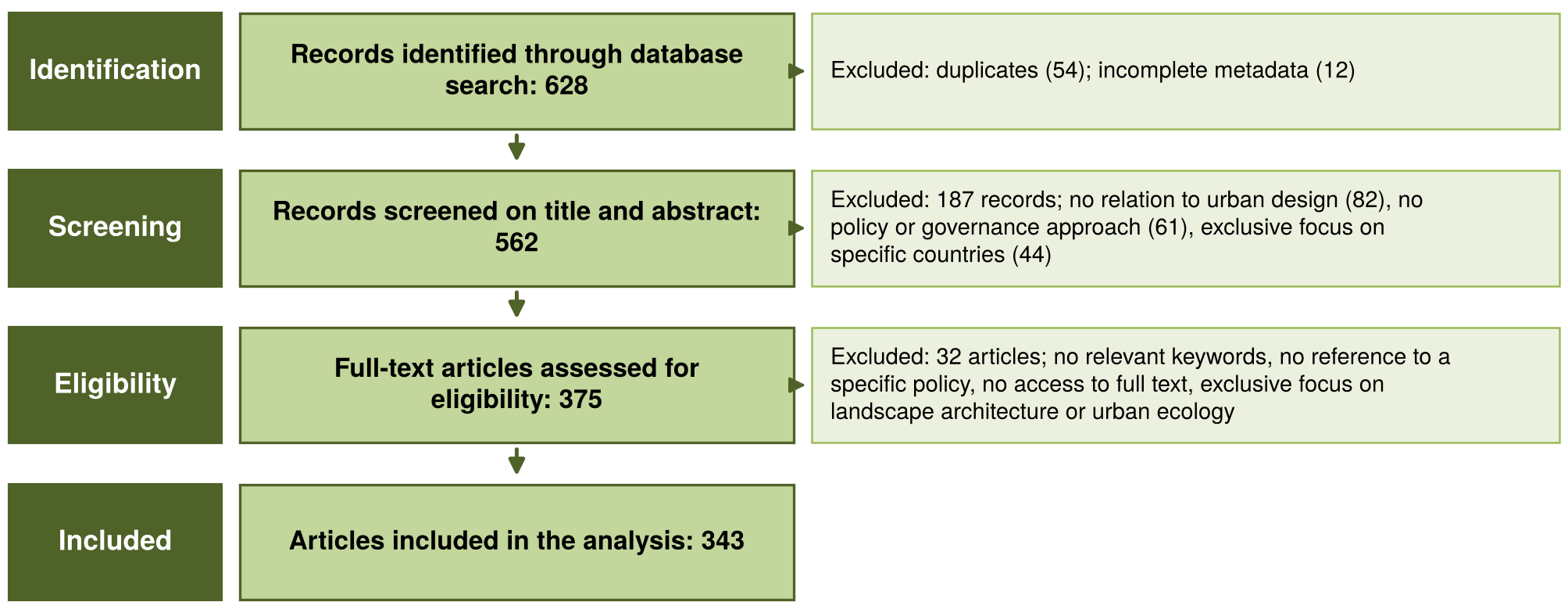
Figure 1) Screening and selection of articles according to the PRISMA standard (from 628 retrieved records to 343 articles included in the analysis)
Given the mixed approach of this study (combining quantitative network analysis with in-depth policy interpretation), the qualitative assessment of the input documents plays a vital role in the validity of the final results. Therefore, the standard CASP checklist was used for the qualitative screening of the selected articles. This checklist, regarded as one of the most reliable critical appraisal tools in policymaking and social science studies, was localized in an abridged form suited to the nature of urban design policy research. To this end, the articles were scored on three key criteria: (1) clarity and explicitness of the research aim, (2) appropriateness of the methodology to the policy question posed, and (3) transparency in reporting policy and governance findings (score range 0 to 10).
It should be emphasized that in this study no article was removed from the quantitative network analysis merely because of a low CASP score, since in scientometrics even articles of weak methodological quality may be influential in citation networks, and removing them would lead to the loss of part of the knowledge structure. However, in the stage of deeper qualitative analysis (performed on 40 highly cited articles), the policy interpretations of articles that scored less than 5 out of 10 on the CASP checklist were weighted with greater caution and alongside the results of higher-scoring articles to prevent biased results from being presented in the discussion and conclusion.
After data extraction, preprocessing was carried out with the Thesaurus tool in VOSviewer to merge synonymous terms and remove very general keywords (such as “model”, “approach”, and “result”). A minimum occurrence threshold of 5 was set for keywords so that only concepts with considerable relative frequency entered the co-occurrence networks. For the analysis of co-authorship and co-citation networks, the full counting method was used for countries and authors, and the fractional counting method was used to moderate the influence of highly cited articles in the co-citation analysis.
Findings
An examination of the frequency of institutional affiliations extracted from the 343 scientific articles selected according to the PRISMA guidelines [Page et al., 2021] showed that knowledge production in the field of urban design policies related to climate change has been highly concentrated in a limited number of countries (Table 1). Among them, China, the United States, and the United Kingdom were identified as the most influential countries in terms of research participation, which reflects the institutional capacity, research infrastructure, and continuous investment of these countries in research related to climate and urban design and planning [He et al., 2016; Li et al., 2024]. Previous studies have also emphasized the role of institutional capacity, multilevel governance, and scientific infrastructure in shaping and implementing urban climate policies [Bulkeley & Betsill, 2005; Bulkeley, 2010; Carmin et al., 2013; Aylett, 2015]. After these countries, Australia and Germany also showed a considerable level of scientific participation, particularly through universities and research centers that have played a role in linking climate research, urban planning, resilience, and policymaking [Asadzadeh et al., 2022; Hunt & Watkiss, 2011; Reckien et al., 2018].
Table 1) Frequency distribution of publications by country and leading, highly cited universities
| Rank | Country | Frequency | Percent of total | Participation level | Leading and highly cited universities |
|---|---|---|---|---|---|
| 1 | China | 72 | 21.0 | Very high | Chinese Academy of Sciences, Nanjing University, Sun Yat-sen University |
| 2 | United States | 65 | 18.9 | Very high | Harvard University, Massachusetts Institute of Technology, University of California Berkeley, University of California Davis, Stanford University |
| 3 | United Kingdom | 54 | 15.7 | Very high | University College London, University of Oxford, University of Cambridge, London School of Economics, University of London |
| 4 | Australia | 38 | 11.1 | High | Australian National University, University of Melbourne, University of Sydney, University of New South Wales Sydney, Royal Melbourne Institute of Technology |
| 5 | Germany | 32 | 9.3 | High | Technical University of Munich, Helmholtz Association, German Aerospace Center, Technical University of Berlin, Humboldt University of Berlin |
| 6 | India | 24 | 7.0 | Medium to high | Indian Institutes of Technology Delhi, Madras, and Bombay, Jadavpur University |
| 7 | Italy | 18 | 5.2 | Medium | Polytechnic University of Milan, University of Bologna, University of Naples Federico II |
| 8 | France | 16 | 4.7 | Medium | French National Centre for Scientific Research, Paris-Saclay University, AgroParisTech, University of Toulouse |
| 9 | Netherlands | 14 | 4.1 | Medium | Wageningen University & Research, Delft University of Technology, Erasmus University Rotterdam |
| 10 | Canada | 12 | 3.5 | Medium | University of Toronto, McGill University, University of British Columbia |
| 11 | Iran | 8 | 2.3 | Limited but significant | University of Tehran, Tarbiat Modares University, Shahid Beheshti University |
| 12 | South Africa | 7 | 2.0 | Limited but significant | University of Cape Town, University of the Witwatersrand, Stellenbosch University |
| 13 | Brazil | 5 | 1.5 | Limited | University of São Paulo, Federal University of Rio de Janeiro, Federal University of Rio Grande do Sul |
| 14 | Japan | 4 | 1.2 | Limited | Tokyo Institute of Technology, Kyoto University, Nagoya University |
| 15 | Sweden | 3 | 0.9 | Limited | Lund University, Stockholm University, Umeå University |
It is noteworthy that China is the only developing country in this set that has shown a pattern similar to developed countries in terms of the volume and institutional diversity of research participation. This situation is consistent with the expanding trend of research on low-carbon cities, energy transition, climate planning, and spatial transformation in Chinese cities [He, 2017; Jiang et al., 2023; Liu et al., 2023; Wang et al., 2025; Wei et al., 2025]. In contrast, the participation of other developing countries has been mainly scattered, limited to a few specific universities, and lacking broad institutional coherence; a situation that has also been noted in the literature on institutional capacity, climate governance, and resource constraints in the countries of the Global South [Dodman & Satterthwaite, 2008; Satterthwaite, 2011; Carmin et al., 2012; Fünfgeld, 2010]. Abundant evidence from African and Asian cities shows that, because of infrastructural, institutional, and financial constraints, the path of low-carbon urban development and adaptation to climate change in these regions requires a path different from that of developed countries [Akomolafe et al., 2024; Alohan & Oyetunji, 2021; Andal, 2022; Appau et al., 2024; Asare & Tuffour, 2024].
The co-authorship network analysis (performed with scientometric and bibliometric tools such as VOSviewer and social network analysis methods [Cobo et al., 2011; Donthu et al., 2021; Ye & Ge, 2019; Zhang et al., 2021]) showed that the structure of scientific collaboration in this field has been centralized, sparse, and dependent on small research clusters. The lack of expansion of the network into wider international clusters indicated that knowledge production in this part of the literature has remained dependent on limited research cores and closed in-group collaborations. From the perspective of developing urban climate science, such a structure can limit the capacity for knowledge transfer, diversity of perspectives, and cross-contextual learning; an issue that has also been emphasized in studies of climate knowledge networks and urban research agendas [McPhearson et al., 2016; Bai et al., 2018a; Hunter et al., 2023].
The pattern of links showed that some researchers have played the role of central nodes in the flow of scientific production, in such a way that a large part of the scientific interactions has been organized through a few specific authors. On the one hand, this concentration indicates specialized consolidation in paths such as climate-oriented policymaking, urban governance, adaptation, and resilience; on the other hand, in the absence of broad interdisciplinary links, it can increase the risk of homogenization of theoretical and methodological frameworks. The need to build links among the disciplines of planning, urban design, climate science, governance, and the social sciences has also been emphasized in the recent literature on cities and climate [Solecki et al., 2013; Bai et al., 2018a; Lobo et al., 2023].
From a policy analysis perspective, this pattern of limited collaboration carries a clear message for developing countries: the global knowledge network on urban design policies related to climate change has not yet reached the level of network maturity, institutional diversity, and balanced geographical distribution. Studies on climate governance in the Global South have shown that limited institutional capacity, financial resources, and unequal access to knowledge can reduce the ability of cities to shape adaptation policies independently [Dodman & Satterthwaite, 2008; Satterthwaite et al., 2007; Carmin et al., 2012; Koch, 2021; Satterthwaite, 2009]. Studies on urban governance in developing countries also emphasize that weak cross-sectoral coordination and the absence of coherent institutional frameworks are the main obstacles to the successful implementation of climate policies [Bhardwaj & Khosla, 2021; Deshpande, 2025; Fanaian & Fanaian, 2023; Fatti & Patel, 2013; Friend et al., 2014].
Consequently, rather than resulting from broad synergy among universities, policymaking institutions, and different geographical regions, knowledge production in this field has been concentrated in a few specific research poles. This situation may lead to the reproduction of policies that are less adaptable to the diversity of the economic, institutional, and physical contexts of developing countries. Studies on climate policy transfer have also shown that urban policies may encounter institutional, political, and social differences when transferred between contexts [Fisher, 2014; Koch, 2018; Lizarralde et al., 2020; Verdini et al., 2025]. In this regard, concepts such as institutional lock-in and path dependency in urban planning indicate that changing development paths in the cities of the Global South requires a deep understanding of local contexts and going beyond imported models [Hetz & Bruns, 2014; Hetz & Bruns, 2016; Koch, 2018].
Overall, the co-authorship network showed that although an active scientific core has formed in this field, weak interregional and interdisciplinary links remain one of the structural gaps in the production of policy-oriented knowledge on climate and urban design; a gap that reinforces the need for comparative and participatory research and for the localization of policies in developing countries. The emphasis on participatory research, contextual knowledge, and transdisciplinary approaches has also been increasingly raised in urban climate studies of the Global South [Cilliers et al., 2014; Hardoy et al., 2019; Frota & Freitas, 2024; Petrillo & Bellaviti, 2018; Verdini et al., 2025].
The analysis of the international collaboration network, based on country co-authorship, showed that knowledge production in the field of urban design policies related to climate change has had a multipolar but unbalanced structure in which a few countries have acted as hegemonic nodes of knowledge flow. At the center of gravity of the network were the United States, England, Germany, China, Australia, and India, which established the largest volume of scientific collaboration links with other countries. These countries have had a decisive position not only in terms of the number of scientific outputs but also in terms of their brokerage role in connecting different geographical clusters, and they have in practice shaped the main channels of climate-oriented knowledge exchange. The formation of international urban and climate research networks and the role of certain countries in connecting different scientific streams are consistent with studies that emphasize urban climate science networks and international collaboration [McPhearson et al., 2016; Hunter et al., 2023; Lobo et al., 2023; Laino & Iglesias, 2023].
At the semi-peripheral level, countries such as Brazil, South Africa, Canada, the Netherlands, Sweden, France, and Spain were observed, which have often played a connecting role between the core of developed countries and developing countries.
The significant presence of South Africa, India, Bangladesh, Kenya, Nigeria, Vietnam, Indonesia, Thailand, and Egypt in the network also indicated that developing countries have gradually become more active players in the production of policy-oriented climate knowledge. However, the intensity and direction of their scientific links have still been mainly oriented towards the core countries, and they have had limited network independence. Research evidence from countries such as Bangladesh, Vietnam, and Indonesia shows that these countries face common challenges such as informal settlements, water management, and spatial inequality, which require local and participatory approaches [Ahsan et al., 2011; Huq & Shafique, 2023; Ngoc et al., 2024; Nguyen et al., 2010; Setiadi et al., 2020]. This situation is consistent with the evidence in the Global South literature on dependence on the scientific, financial, and institutional capacities of developed countries.
Studies on urban adaptation in developing countries have shown that local capacity, access to resources, governance structures, and international networks play a decisive role in shaping policy pathways [Carmin et al., 2012; Carmin et al., 2013; Friend et al., 2014; Koch, 2021]. Research conducted in African cities such as Cape Town, Johannesburg, and Maputo has also emphasized the importance of local institutional capacity and the challenges arising from socio-economic inequalities in coping with climate change [Fatti & Patel, 2013; Hetz, 2016; Ho et al., 2023; Zehra et al., 2019].
From a policy analysis perspective, this configuration has shown that the dominant formulations in climate-oriented urban design policies have mainly been shaped on the basis of the institutional, financial, and governance experiences of developed countries and have then spread to developing countries. Consequently, the risk of a mismatch between policies and the institutional, economic, and spatial contexts of developing countries arises as a structural challenge in policy transfer. Studies on urban climate policies in different countries have also emphasized the importance of context, institutional capacity, and differences in governance structures [Bulkeley & Betsill, 2013; Fisher, 2014; Koch, 2018; Pazhuhan, 2023; Woiwode et al., 2024]. Studies on urban planning in Turkey, Mexico, and Brazil also show that climate policies that ignore local institutional and social contexts may increase inequalities [Balaban, 2019; Di Giulio et al., 2019; Munoz-Pizza et al., 2023; Peker & Ataov, 2021; Rasch, 2016; Silva et al., 2022].
In addition, the relative weakness of the links among developing countries in the network, for example among African, South Asian, and Latin American countries, shows that the exchange of localized experiences among countries with similar development problems has not yet reached maturity. This gap is also observed in the literature on climate planning and urban knowledge in the Global South, particularly in studies that emphasize local knowledge production, participatory processes, and non-Western-centered approaches [Frota & Freitas, 2024; Lizarralde et al., 2020; Rahman et al., 2023; Verdini et al., 2025]. Studies on the transfer of climate policies in Latin America and Africa show that South–South cooperation can act as a key strategy for reducing dependence on North–South models and for strengthening local capacities [Cavaco & Campello Torres, 2025; Lizarralde et al., 2020; Rahman et al., 2024].
Thus, the international collaboration network indicated that although the discourse of urban design policies and climate change has become global in nature, the power of knowledge production, theoretical direction, and policy authority remain strongly in the hands of developed countries. This imbalance highlights, as a strategic priority, the need to develop independent research networks in developing countries, to strengthen climate-oriented science diplomacy, and to move towards producing “context-sensitive, local, and justice-oriented” urban design policies for these countries [Koch, 2021; Petrillo & Bellaviti, 2018; Frota & Freitas, 2024; Verdini et al., 2025].
The keyword co-occurrence network analysis showed that the concept of “climate change”, as the central core and the densest conceptual node, forms the main axis of knowledge organization in this field and is directly linked to concepts such as city, cities, urbanization, sustainable development, mitigation, and adaptation. This pattern indicates that the dominant scientific discourse has framed climate change not as a purely environmental issue but as a deeply urban, developmental, and policy-oriented phenomenon; an issue that has also been emphasized in comprehensive reviews of cities and climate change [Hunt & Watkiss, 2011; Revi et al., 2014; Bai et al., 2018a; McPhearson et al., 2016; Grimm et al., 2008; IPCC, 2018; Revi, 2008].
The cluster structure of the network represented four main conceptual domains: (1) the physical–technical cluster; (2) the ecological–infrastructural cluster; (3) the governance–policymaking cluster; and (4) the vulnerability–resilience cluster (Table 2; Figure 2).
Table 2) Cluster structure of the network of main concepts
| No. | Cluster | Main concepts and keywords | Main focus and theme |
|---|---|---|---|
| 1 | Physical–technical cluster | Built environment, building, energy efficiency, thermal comfort, land use, heat island | Focus on the role of physical design, buildings, and the optimization of energy consumption in responding to climate change and reducing its consequences in urban environments [Creutzig et al., 2015; Seto et al., 2014; Sun et al., 2022; Nandi et al., 2025; Andrić et al., 2019; Koc et al., 2024; Kuittinen, 2023; Mapfumo et al., 2024] |
| 2 | Ecological–infrastructural cluster | Green infrastructure, ecosystem services, biodiversity, water, urban sustainability | Shift of the literature towards nature-based solutions and green infrastructure, with emphasis on ecosystem services, biodiversity, water management, and urban sustainability [Castaldo et al., 2025; Mirsafa et al., 2025; Seidu et al., 2025; De Oliveira et al., 2025; Frantzeskaki et al., 2019; Goyal & Biswas, 2025; Gebru et al., 2025; Pimentel Da Silva et al., 2022; Han et al., 2025] |
| 3 | Governance–policymaking cluster | Governance, urban governance, policy, politics, justice, implementation | Responses to climate change are defined and implemented within institutional structures, policymaking, and political power relations, and issues such as justice and policy implementation are important [Bulkeley, 2010; Bulkeley & Betsill, 2013; Aylett, 2015; Liss et al., 2025; Deshpande, 2025; Kochskaemper et al., 2025; Peker & Ataov, 2021; Yadav et al., 2024] |
| 4 | Vulnerability–resilience cluster | Vulnerability, risk, resilience, poverty, informal settlements | Focus on vulnerability and urban resilience capacity, especially in relation to poverty, informal settlements, and the specific conditions of cities in developing countries [Adger, 2006; Birkmann et al., 2013; Meerow et al., 2019; Eakin et al., 2025; Sultana et al., 2020; Ajibade, 2019; Bhanye, 2025; Moulds et al., 2021; Rasch, 2016] |
The keyword density map (Figure 2) clearly showed that the concepts of cities, adaptation, governance, and resilience, alongside climate change, have had the highest density; this indicates a gradual shift in the focus of research from purely mitigation-oriented approaches towards urban adaptation, governance, and resilience policies. This development is consistent with the theoretical literature on urban resilience and climate governance [Davoudi et al., 2012; Davoudi et al., 2013; Meerow et al., 2016; Leichenko, 2011; Shi & Moser, 2021; Smit & Wandel, 2006; Wamsler, 2013].
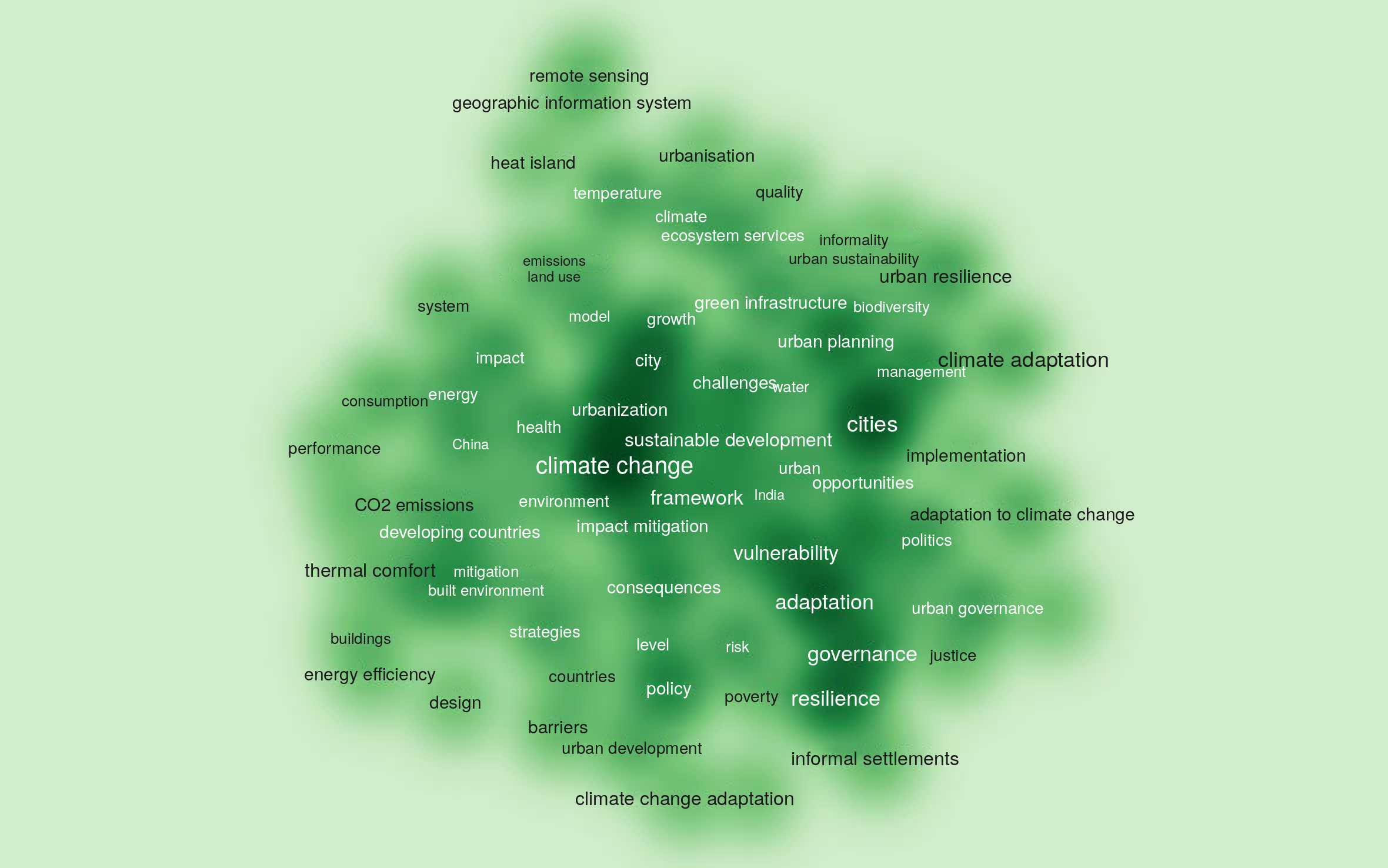
Figure 2) Density map of urban design policies and climate change based on keyword co-occurrence
In contrast, although concepts such as geographic information systems (GIS), remote sensing, and modeling have been present in the network, they have been located on the margins of conceptual density, which indicates that, alongside the growth of technological tools, the new policy literature pays considerable attention to the institutional, governance, and social dimensions of climate responses. Studies based on GIS and remote sensing in the cities of developing countries remain important for assessing hazards, urban form, heat islands, and access to green infrastructure [Fernandez & Schroeder, 2023; Nwogu et al., 2025; Zuetell et al., 2025; Zwirglmaier & Garschagen, 2024; Jia et al., 2019; Shahfahad et al., 2022; Sampurno et al., 2023; Jamarkattel et al., 2025; Odunsi & Rienow, 2024], but these tools alone cannot address institutional problems and social justice.
The strategic point for the present article is that the keywords developing countries, informal, vulnerability, poverty, and informal settlements are directly connected to the governance and resilience cluster; this shows that the scientific discourse essentially interprets climate change in the Global South within the framework of institutional inequalities, urban poverty, and the fragility of governance systems. This interpretation is also consistent with studies on the cities of the Global South, informal settlements, and just adaptation [Watson, 2009; Dodman & Satterthwaite, 2008; Chu, 2016a; Anguelovski & Carmin, 2011; Archer et al., 2014; Eakin et al., 2025; Huq & Shafique, 2023]. Empirical studies in various cities of the Global South, including in Peru, Bangladesh, and Kenya, show that informal settlements are highly vulnerable because of their exposure to climate hazards and the lack of adequate infrastructure and require special, justice-oriented urban design approaches [Fernandez & Schroeder, 2023; Piashi et al., 2025; Zehra et al., 2019; Sultana et al., 2020].
However, the relative weakness of the link between the “physical design” cluster and the “justice and governance” cluster has indicated an important conceptual gap in the literature; a gap showing that urban design policies have not yet been systematically formulated in the service of climate justice and of reducing the vulnerability of disadvantaged groups. Studies on justice in climate adaptation, urban greening, and the distributional consequences of climate interventions have also shown that physical and environmental measures, in the absence of justice considerations, may even reproduce or intensify spatial inequalities [Anguelovski et al., 2014; Bulkeley et al., 2014; Shi et al., 2016; Meerow et al., 2019; Haque & Sharifi, 2024; Mabon & Shih, 2022; Mabon et al., 2023].
Overall, the keyword co-occurrence analysis shows that the global literature on urban design policies and climate change is in transition from engineering-oriented approaches towards paradigms of governance, resilience, green infrastructure, and climate justice. However, the lack of full interconnection among urban design, governance, and social justice remains one of the theoretical and policy gaps in the context of developing countries; a gap that the present study directly seeks to fill [Shi et al., 2016; Rahman et al., 2023; Verdini et al., 2025].
Temporal evolution of the research discourse The results show that the evolution of knowledge in this field has moved from an initial focus on climate hazards and vulnerabilities towards urban adaptation and resilience and, in recent years, has turned to topics such as climate justice, energy transition, low-carbon cities, and nature-based solutions. This development indicates a transition from technical and reactive approaches towards integrated, social, and transformative approaches in urban design policies [Adger, 2006; Davoudi et al., 2012; Meerow et al., 2016; Sharifi et al., 2021; Shi & Moser, 2021; Moser & Ekstrom, 2010; Smit & Wandel, 2006; Wamsler, 2013] (Table 3).
Table 3) Evolution of issues, discourses, approaches, and dominant policy tools in research on urban design policies related to climate change
| Period | Dominant discourse | Central issue | Dominant keywords | Policy objective | Dominant policy approach | Key tools and strategies |
|---|---|---|---|---|---|---|
| 2007–2012 | Climate risk and vulnerability | Consequences of climate change for cities and urban infrastructure | Climate risk, vulnerability, disaster management, urban consequences | Reducing vulnerability and managing hazards [Adger, 2006; Füssel, 2007; Hunt & Watkiss, 2011; Romero-Lankao & Dodman, 2011; Smit & Wandel, 2006; Shaw et al., 2010; Anguelovski et al., 2018; Chu et al., 2016; De Angelis et al., 2016; Dodman et al., 2019; Friel et al., 2011a; Friel et al., 2011b; Hernandez Aguilar et al., 2021; Jonsson et al., 2015; Khalil & Al-Ahwal, 2021; Liu & Balk, 2020; Ziervogel et al., 2017] | Climate risk management [Aboagye & Sharifi, 2024; Asif et al., 2023; Bardhan et al., 2020; Chu, 2016b; Dawson, 2017; Huang et al., 2010; Marks & Pulliat, 2022; Parker et al., 2025; Ramakreshnan et al., 2019; Rodriguez et al., 2019; Rosenzweig et al., 2011; Rosenzweig et al., 2018; Mundula & Balletto, 2019; Odemerho, 2015; Rabelo et al., 2019; Rathnayaka et al., 2023; Saleem et al., 2013; Yang et al., 2023] | Risk assessment, disaster risk reduction programs, early warning systems, infrastructure retrofitting [Füssel, 2007; Birkmann et al., 2013; De Risi et al., 2018; Adeloye & Rustum, 2011; Amos et al., 2018; Asad et al., 2022; Barros et al., 2021; Bisarol, 2019; Canteiro et al., 2024; Dawson et al., 2011; Derdouri et al., 2024; Dutta-Koehler, 2012; Hallegatte et al., 2013; Head, 2010b; Horlings & Marschke, 2020; Irfan et al., 2018; Jones et al., 2017] |
| 2013–2018 | Climate resilience and governance | Capacity of cities to adapt to climate change | Urban resilience, adaptation, governance, institutional capacity | Enhancing resilience and multilevel governance [Davoudi et al., 2013; Bulkeley et al., 2013; Friend et al., 2014; Carmin et al., 2013; Aylett, 2015; Wamsler, 2013; Romero-Lankao et al., 2016a; Romero-Lankao et al., 2016b; Sanchez Rodriguez & Morales Santos, 2018; Swan et al., 2025; Yang, 2023; Mawe et al., 2025; Naess, 2023; Onyanta, 2016; Perry et al., 2022; Reckien et al., 2014; Ren et al., 2011; Romero-Lankao & Rosenzweig, 2010; Sethi & Puppim De Oliveira, 2018; UN-Habitat, 2011; While et al., 2004; Zhang & Ramos, 2022; Liu et al., 2024a; Mashur et al., 2023] | Urban adaptation and resilience [Ahern, 2011; Alhasaani et al., 2025; Almulhim & Cobbinah, 2024a; Araos et al., 2016; Araya-Munoz et al., 2017; Barrico & Castro, 2019; Birkmann et al., 2014; Blagojevic et al., 2020; Borie et al., 2019; Bulkeley & Tuts, 2013b; Choudhary & Neeli, 2018; Di Napoli et al., 2023; Evans, 2011; Fünfgeld & McEvoy, 2011; Jimoh et al., 2021; Joshua et al., 2020; Krishnan et al., 2023; Kumar et al., 2025; Lin et al., 2021; Mojtahedi & Oo, 2014; Mugisha et al., 2025; Nsabimana et al., 2023; Peng et al., 2024; Petzold et al., 2024] | Urban adaptation programs, participatory governance, integrated management, strengthening institutional capacity [Carmin et al., 2013; Davoudi et al., 2013; Friend et al., 2014; Chu, 2016a; Abubakar et al., 2025; Albalawi, 2025; Alizadeh & Meshkini, 2025; Almulhim & Cobbinah, 2024b; Bai et al., 2018b; Barman et al., 2023; Betsill & Bulkeley, 2007; Castán Broto, 2017; Das et al., 2023; Das & Jain, 2022; Dubbeling, 2014; Farhangi et al., 2021; Hurlimann et al., 2025; Khosla & Bhardwaj, 2019; Khouma et al., 2014; Kii et al., 2017; Kocabas, 2014; Li et al., 2023; Liu et al., 2021] |
| 2019–2025 | Climate justice and sustainable transition | Climate inequalities, energy transition, and urban sustainability | Climate justice, energy transition, nature-based solutions, green infrastructure, low-carbon city | Achieving sustainable development and climate justice [Sharifi et al., 2021; Anguelovski et al., 2014; Shi et al., 2016; Castaldo et al., 2025; Mirsafa et al., 2025; Frantzeskaki et al., 2019; Haque & Sharifi, 2024; De Oliveira Rolo et al., 2022; Diko & Hollstein, 2023; Dodman, 2009; Dong et al., 2021; Ewane et al., 2023; Ferreira et al., 2023; Holtermann, 2020; Jiao et al., 2025; Kayitete et al., 2025; Liu et al., 2025b; Liu et al., 2024b; Malmqvist & Rundle, 2002; Moreno et al., 2021; Nero et al., 2017; Rizzo, 2020; Rojas et al., 2022; Sandholz, 2016; Schubert, 2024; Seto et al., 2012; Xiao et al., 2025; Gallardo et al., 2018] | Climate transition and sustainable development [Alsharif et al., 2020; Gibberd, 2013; Hijriyah et al., 2025; Iyer-Raniga & Dalto, 2016; Koren & Butler, 2006; Liu et al., 2025a; Marome, 2017; Mukumba et al., 2025; Ness, 2022; Omwoma et al., 2017; Patz et al., 2007; Persson et al., 2015; Gaum & Laubscher, 2022; Harvey, 1996; Kilinc-Ata et al., 2025; Lartey & Glaser, 2024; Lebel et al., 2007; Lefevre, 2009; Li, 2024; Li et al., 2010; Madson et al., 2023; Mishra et al., 2017; Nawaz et al., 2022; Ness, 2023; Oguntona & Akinradewo, 2025; Ruhe et al., 2013; Schüle et al., 2013; Tareke, 2024; Wang et al., 2024] | Green infrastructure, nature-based solutions, low-carbon cities, transit-oriented development, renewable energy, spatial justice [Sharifi et al., 2021; Castaldo et al., 2025; Mirsafa et al., 2025; Seidu et al., 2025; Buffam et al., 2022; Chen et al., 2020; Das et al., 2025; De Oliveira et al., 2011; Alderton et al., 2021; Arioli et al., 2020; Ashik et al., 2023; Awadh, 2018; Aydin & Kahraman, 2022; Bhawra et al., 2023; Bichueti et al., 2025; Bowen et al., 2014; Bulkeley & Tuts, 2013a; Butsch et al., 2017; Cruz et al., 2024; Das, 2025; Davoudi et al., 2009; Doll & Balaban, 2013; Gadiaga et al., 2025] |
Source co-citation network analysis The source co-citation network analysis, using VOSviewer and the fractional counting method recommended by several methodological studies [Boulanger, 2023; Cobo et al., 2011; Donthu et al., 2021; Page et al., 2021], showed that the literature on urban design policies related to climate change has a stable classical core and several emerging conceptual waves. At the center of gravity of the network are classical works related to the cities of developing countries, risk, vulnerability, and climate planning. Among the sources in the present collection, the work of Watson [Watson, 2009] occupies an important position in linking urban planning, poverty, disadvantaged settlements, and development policymaking, and it is consistent with the literature that emphasizes the need to consider the social and spatial conditions of poor cities [Watson, 2009; Blanco et al., 2009; Dodman & Satterthwaite, 2008; Satterthwaite, 2009].
Along this core lies a set of studies on urban risk, vulnerability, and adaptation that show a conceptual transition from “climate policy” to “resilience, risk reduction, and adaptive planning”. This development can be seen in the literature through vulnerability and risk frameworks [Adger, 2006; Füssel, 2007; Birkmann et al., 2013] and then through urban resilience and adaptation approaches [Davoudi et al., 2012; Davoudi et al., 2013; Meerow et al., 2016]. Foundational studies on vulnerability and adaptation also emphasize that understanding urban vulnerability requires simultaneous attention to its social, economic, institutional, and physical dimensions [Smit & Wandel, 2006; Romero-Lankao & Qin, 2011; Romero-Lankao & Gnatz, 2013; Moser & Ekstrom, 2010].
In the newer layers of the network, works on governance, climate experimentation, and urban adaptation policies appear as intermediary nodes. These studies play an important role in connecting the discourses of “multilevel governance”, “urban adaptation”, and “climate-oriented institutional policies” [Bulkeley & Betsill, 2005; Bulkeley, 2010; Bulkeley & Castán Broto, 2013; Chu, 2016a]. This network position shows that from the mid-2010s onwards, the focus of research shifted from “what policy is” to how climate adaptation is institutionally embedded in cities; a change that is also observed in studies on institutional capacity and local governance [Aylett, 2015; Koch, 2018; Pazhuhan, 2023; Luque et al., 2013].
In the most recent layer of the network are works on the synergy of adaptation and mitigation, policy evaluation, resilience, and the link between urban design and climate justice. This trend is consistent with the study of Sharifi et al. [Sharifi et al., 2021] on the synergy of adaptation and mitigation, as well as with more recent studies on the gap between policymaking and the implementation of adaptation plans [Sharifi et al., 2021; Liss et al., 2025; Grafakos et al., 2019; Hurlimann et al., 2021]. Moreover, the increasing attention to spatial and social justice in the recent literature indicates a move away from purely technical approaches towards a distributional assessment of climate policies [Shi et al., 2016; Anguelovski et al., 2014; Meerow et al., 2019; Haque & Sharifi, 2024; Mabon & Shih, 2022].
In terms of the overall network structure, the co-citation pattern indicated that the literature of this field has followed an evolutionary path from development policymaking → resilience and risk management → adaptation governance → evaluation and integration of urban design policies. However, the conceptual distance between the early and the new clusters shows that the theoretical link between “urban design” and “climate justice and adaptive governance” has not yet reached full coherence; a gap that the present study seeks to examine in the context of developing countries.
Author co-citation network analysis The author co-citation network analysis shows that the discourse of urban design policies related to climate change is organized around several distinct but interconnected intellectual poles, each representing a dominant paradigm in interpreting and coping with climate change in the urban context.
At the center of the network, authors such as Sharifi and Watson have appeared as intermediary nodes between theoretical clusters, playing a connecting role among the discourses of urban resilience, climate governance, and urban development in the Global South [Watson, 2009; Sharifi et al., 2021; Sharifi et al., 2023]. This network position indicates that the theoretical development of the field has moved from development-oriented planning towards integrated frameworks of resilience, adaptation, and climate-oriented governance.
In a separate but connected cluster are studies related to urban experimentation and innovation. This stream regards the city as an arena for experimenting with climate policies, institutional learning, and social innovation and emphasizes the transformative capacity of urban actions [Bulkeley & Castán Broto, 2013; Bulkeley & Castán Broto, 2015; Castán Broto & Bulkeley, 2013; Castán Broto et al., 2015].
At another level, a cluster of studies represents the paradigm of risk, vulnerability, and adaptation in the Global South. This cluster focuses on institutional constraints, social fragility, spatial inequality, and the adaptive capacity of the cities of developing countries [Carmin et al., 2012; Chu, 2016a; Anguelovski & Carmin, 2011; Romero-Lankao & Dodman, 2011; Satterthwaite et al., 2007; Hetz, 2016].
Another cluster represents the stream of urban energy, low-carbon transition policies, and adaptation-oriented planning. This cluster has the strongest links with debates on physical design, energy efficiency, and urban systems and shows that climate-oriented urban design policies have gradually expanded from the purely building scale to the scale of energy–city systems. This trend can be observed in studies on urban energy consumption, urban form, transportation, and low-carbon transition [Dhakal, 2010; Creutzig et al., 2015; Colenbrander et al., 2017; Ho et al., 2013; Jiang et al., 2023].
On the other side of the network, the dimensions of poverty, social justice, informal housing, and adaptation policies in disadvantaged cities have been the focus. The connection of this cluster to the theoretical core of the network shows that the contemporary literature increasingly redefines climate change in connection with structural inequality and social vulnerability [Anguelovski et al., 2014; Ajibade, 2019; Meerow et al., 2019; Eakin et al., 2025; Sultana et al., 2020].
Overall, the author co-citation network shows that the discourse of urban design policies and climate change has passed through a multi-paradigm evolutionary path: from “urban development in developing countries” to “risk and vulnerability”, “resilience and adaptive governance”, and finally to “innovation, energy transition, and complex urban systems”. However, the link between the “physical design and energy” cluster and the “social justice and urban poverty” cluster still lacks full theoretical coherence; a gap that the present study seeks to examine precisely through the analysis of climate-oriented urban design policies in developing countries.
Bibliographic coupling network analysis of documents The bibliographic coupling network analysis of documents shows that the literature on urban design policies related to climate change is organized into several active, co-referencing, and intertwined research fronts, each relying on a common set of theoretical and policy sources. Four main clusters can be distinguished in this network, representing the axes of “resilience and governance”, “risk and adaptation”, “energy transition and urban systems”, and “spatial policies and climate justice”. The first cluster contains studies on resilience, governance, and the synergy of climate policies, in which the link among adaptation, mitigation, and the transformation of urban systems is prominent [Sharifi et al., 2021; Sharifi et al., 2023]. The coupling strength of this cluster shows that a large part of contemporary studies analyze urban design policies under the logic of structural transformation and the link among energy, urban form, and climate governance. This trend is consistent with studies on urban energy, urban form, and emission reduction [Creutzig et al., 2015; Seto et al., 2014; Sun et al., 2022].
The second cluster contains the more classical works on urban risk, vulnerability, and adaptation, which have provided an important theoretical framework for analyzing climate policies [Adger, 2006; Birkmann et al., 2013; Hunt & Watkiss, 2011; Blanco et al., 2009]. The coupling of this cluster with new studies shows that the early conceptual frameworks remain reference points but have been reinterpreted in the form of urban design policies, adaptive governance, and resilience.
The third cluster has formed around studies on multilevel governance, urban energy policy, and policymaking in developing countries. The high density of links in this cluster shows that climate-oriented urban design policies in developing countries have been formulated above all in the context of institutional constraints, energy policies, and local governance capacities [Chu, 2016a; Fisher, 2014; Bhardwaj & Khosla, 2021; Pazhuhan, 2023].
In the fourth cluster, a set of new works centered on policy, spatial justice, strategic planning, and institutional adaptability can be observed. This cluster has the greatest overlap with studies on developing countries, inequality, informal housing, and weak institutional capacity [Angelo & Wachsmuth, 2020; Asadzadeh et al., 2022; Lobo et al., 2023; Bonilla-Bedoya et al., 2022; Eakin et al., 2025].
In terms of the overall network structure, the coupling pattern shows that the literature of this field has passed through a gradual but convergent path: from “risk and adaptation” to “governance and urban energy” and finally to “transformation of urban systems, climate justice, and design policies”. However, the still relatively weak connection between the “energy transition–urban system” cluster and the “spatial justice–physical design” cluster shows that urban design policies have not yet been fully integrated with the logic of climate justice and urban poverty; a gap that has also been highlighted in studies of climate justice and urban adaptation [Shi et al., 2016; Anguelovski et al., 2014; Meerow et al., 2019].
The analysis of citation networks and conceptual clusters shows that urban design policies have moved from reactive, hazard-control measures towards transformative and multidimensional strategies. In this period, attention to the link among the environmental, social, and economic dimensions of cities has increased, and approaches based on justice and sustainability have gained a more prominent position [Davoudi et al., 2012; Sharifi et al., 2021; Shi & Moser, 2021].
Theoretical and discursive cores The source co-citation network analysis showed that the theoretical body of urban design policies related to climate change is organized on the basis of four main and interconnected discursive cores, each representing a dominant paradigm in explaining, policymaking, and acting in climate-oriented urban practice.
At the center of the network are classical sources such as Watson [Watson, 2009], Pelling [Pelling, 2011], Revi [Revi, 2008], Revi et al. [Revi et al., 2014], and the body of studies on vulnerability, adaptation, and the cities of developing countries, which play the role of the theoretical backbone linking climate change, adaptation, development, and urban planning [Watson, 2009; Revi, 2008; Revi et al., 2014; Pelling, 2011]. This concentration of authority shows that the dominant framework has, from the outset, rested on the link among climate risk, governance, and urban development in developing countries.
The first cluster of the network has represented the discourse of climate-oriented urban governance, institutional experimentation, and local action. The high density of links in this cluster shows that urban design policies, rather than having developed in a linear and top-down manner, have been formulated through processes of learning, institutional innovation, and local action [Anguelovski et al., 2014; Archer et al., 2014; Carmin et al., 2012; Bulkeley & Castán Broto, 2013; Castán Broto et al., 2015]. This cluster has shaped the theoretical basis for analyzing urban design policies as acts of multilevel governance.
The second cluster, focusing on studies of risk, vulnerability, urban systems, and multiple hazards, has represented the paradigm of risk and vulnerability. This cluster shows that climate-oriented urban design has increasingly been interpreted within the framework of the fragility of urban systems, multiple hazards, and adaptive capacity; this has provided the theoretical basis for physical and spatial resilience policies [Adger, 2006; Birkmann et al., 2013; Douglas et al., 2008; De Risi et al., 2018].
The third cluster represents studies on resilience, adaptive planning, and socio-spatial justice. This cluster indicates the shift of the literature from “risk control” to “adaptive capability, institutional capacity, and climate justice” and shows that urban design policies are no longer merely tools for reducing damage but are also interpreted as mechanisms that shape the distribution of risk and opportunity in urban spaces [Davoudi et al., 2012; Leichenko, 2011; Meerow et al., 2016; Meerow et al., 2019].
The fourth cluster, focusing on green infrastructure, urban ecosystems, ecosystem services, and nature-based solutions, belongs to the discourse of nature-oriented policies. This cluster indicates the consolidation of the transition from hard engineering solutions to nature-based solutions in climate-oriented urban design policies [Castaldo et al., 2025; De Macedo et al., 2025; De Oliveira et al., 2025; Mirsafa et al., 2025; Seidu et al., 2025].
The strategic point of the network is that although these four clusters are theoretically strongly connected to one another, the direct link between the “physical–spatial design” cluster and the “social justice–urban poverty” cluster is still weaker than the other links. This gap in authority shows that the existing literature, despite extensive attention to resilience and governance, has not yet been able to systematically formulate urban design policies in the service of climate justice in developing countries. Evidence on urban greening, equity in access to ecosystem services, informal housing, and the distributional consequences of adaptation also underlines the importance of this gap [Anguelovski et al., 2014; Haque & Sharifi, 2024; Sultana et al., 2020; Eakin et al., 2025].
Comparison of regional patterns A comparison of regional patterns shows that developed countries have focused more on carbon emission reduction, energy transition, energy efficiency, technological innovation, and the transformation of urban systems, whereas developing countries are mainly confronted with the challenges of urban poverty, spatial inequality, informal settlements, and social vulnerability. This difference can be seen in the literature on low-carbon cities, energy consumption, and energy transition in developed countries, as well as in studies on poverty, vulnerability, and adaptation in the Global South [Creutzig et al., 2015; Ho et al., 2013; Colenbrander et al., 2017; Akomolafe et al., 2024; Dodman & Satterthwaite, 2008; Satterthwaite et al., 2007; Romero-Lankao & Dodman, 2011].
In developing countries, the problem of climate change is often intertwined with existing problems of infrastructure shortage, informal settlements, poverty, unequal access to services, and limited governance capacity [Watson, 2009; Chu, 2016a; Anguelovski & Carmin, 2011; Zehra et al., 2019; Du et al., 2022; Ho et al., 2023]. Hence, urban design policies in these contexts cannot focus only on emission reduction or technological solutions and must simultaneously consider the dimensions of adaptation, social justice, institutional capacity, and vulnerability reduction.
These differences show that climate-oriented urban design policies must be formulated in accordance with the economic, social, and institutional conditions of each region and that uniform models cannot be generalized globally. Studies on urban climate policies, policy transfer, and planning in the Global South have also emphasized the need for policy contextualization, stakeholder participation, local knowledge, and institutional capacity [Fisher, 2014; Hardoy et al., 2019; Lizarralde et al., 2020; Frota & Freitas, 2024; Verdini et al., 2025].
Therefore, the findings of this study show that the future of climate-oriented urban design policies in developing countries requires a transition from the model of direct policy transfer towards context-sensitive, participatory, local, and justice-oriented policymaking; an approach in which physical design, governance, resilience, green infrastructure, poverty reduction, and climate justice are considered in an integrated manner [Shi et al., 2016; Meerow et al., 2019; Rahman et al., 2023; Mirsafa et al., 2025; Verdini et al., 2025].
Qualitative analysis of highly cited articles The results of the qualitative analysis of 40 highly cited articles with MAXQDA showed that the most important neglected priorities in the literature on climate-oriented urban design policymaking were, respectively, the institutional gap (68%) and spatial justice (52%). The quality assessment of the articles with the CASP checklist also showed that higher-scoring articles (10 out of 10) mainly addressed institutional and justice-oriented analyses, whereas lower-scoring articles (2 out of 10) focused more on technical and physical aspects. In addition, the citation burst analysis with CiteSpace showed that the concepts of “climate justice” and “adaptive governance” have had the strongest citation bursts in recent years (2022 onwards), which indicates a discursive shift in the global literature. Consistent with the network analysis, these findings confirmed the missing link between physical design and socio-economic justice as the main theoretical–practical gap.
Discussion
The aim of this study was to explain the knowledge structure, discursive patterns, and existing gaps in the field of urban design policymaking related to climate change. The findings of this study depict a deep and structural inequality in the global system of knowledge production on urban design policies and climate change. What emerges from the examination of the co-authorship, co-citation, and keyword co-occurrence networks not only confirms previous findings on the scientific dominance of developed countries [Gazni et al., 2012] but also goes beyond them, revealing new dimensions of qualitative and theoretical inequality that have received less attention in previous bibliometric studies. Contrary to the common perception that reduces scientific inequality mainly to the “shortage of articles” from developing countries [King, 2004], our findings show that the main gap lies not in the volume of production but in theoretical authority and brokerage roles in the global knowledge network. In other words, developing countries, even where they have considerable scientific output (such as China, India, and Brazil), are still placed in a peripheral position, because the dominant theories, analytical frameworks, and main research paths are defined and directed by a small core of countries and specific authors. This finding is consistent with the theory of “epistemic hegemony” in science studies [Alatas, 2003; Connell, 2007], which emphasizes that epistemic colonialism is exercised not by preventing production but by determining “what is worth researching” and “how research should be done”.
At the conceptual level, one of the most important achievements of this study is the identification of a deep theoretical gap between the “physical–technical design” cluster and the “social justice–urban poverty” cluster in the keyword co-occurrence network. This gap, which has been implicitly referred to in previous review studies [Bulkeley, 2013] but had never been measured quantitatively and through networks, shows that urban design, despite its high potential, is still regarded in the scientific literature as a “technical tool” for managing climate hazards rather than as a “socio-political project” for reducing inequality. This separation is clearly distant from recent critical approaches in urban planning that emphasize “spatial justice” and the “climate justice movement” [Fainstein, 2010; Schlosberg & Collins, 2013] and shows that the mainstream literature has not yet been able to free urban design from the dominance of a purely physical–functional view. This finding is fully consistent with the results of previous studies on the “depoliticization of urban design” in the face of climate change [Bulkeley, 2013] and confirms it at a broader level using network data. Hence, it seems that one of the main obstacles to formulating just urban design policies is not a lack of technical knowledge but precisely this “theoretical void” in linking design with social justice. This void, especially in developing countries where urban poverty and spatial inequality are intertwined with climate vulnerability, can lead to policies that on the one hand appear “green” and “resilient” but on the other hand reproduce or even intensify existing inequalities [Checker, 2011].
At the methodological level, the present study shows that the literature of this field is gradually moving from the production of descriptive knowledge to the production of evaluative knowledge. The emergence in recent years of a group of studies focusing on evaluating policy performance and measuring the effectiveness of urban design interventions (e.g., [Dong et al., 2025; Sheehan & Fox, 2022]) indicates the theoretical maturity of this field and its movement towards “usable knowledge”. This development is in line with the recommendations of international institutions such as the United Nations Human Settlements Programme [UN-Habitat, 2020] and the World Bank [World Bank, 2025], which emphasize the need for indicator development and evidence-based evaluation in urban climate policies. However, a noteworthy critical point is that these evaluations are mainly based on criteria derived from the context of developed countries and are by default regarded as “universal”. This approach carries the risk of imposing incompatible criteria and, consequently, of presenting a distorted picture of the performance of developing countries [Escobar, 2011]. This finding is consistent with critical studies on “evidence-based policymaking” that emphasize the need to localize evaluation criteria [Nutley et al., 2007; Head, 2010a] and highlights the need to develop context-sensitive and participatory evaluation frameworks for developing countries.
In terms of scientific collaboration patterns, one of the relatively unexpected results of this study is the very prominent role of China, as a developing country, at the heart of the global knowledge network. China behaves like developed countries not only in terms of the volume of output but also in terms of “theoretical authority” and its “brokerage role” in connecting different geographical clusters. This finding is consistent with previous studies on the emergence of China as a “scientific superpower” [Zhou & Leydesdorff, 2006; Leydesdorff & Wagner, 2009] and shows that the country’s macro science policies and targeted investment in climate research (which form part of China’s 2030 strategic plan) have been able to fundamentally transform its position in the global knowledge system. However, it is worth noting that other developing countries, even those with considerable population and size (such as India, Brazil, and Indonesia), do not enjoy such a position, and their pattern of participation remains limited, scattered, and dependent on the core. This intra-group inequality among developing countries shows that “being developed” or “being developing” alone is not sufficient to explain scientific position; rather, other components such as “institutional capacity”, “targeted investment”, and “macro science policies” play a decisive role. This finding is in line with the theory of “national research capacity” in science and technology studies [Freeman & Soete, 2009] and emphasizes that scientific development is not a linear and automatic process but requires deliberate interventions and strategic investments.
In contrast, the cautious but significant presence of Iran in eleventh place in the publication frequency table (with leading universities such as the University of Tehran, Tarbiat Modares University, and Shahid Beheshti University) indicates considerable scientific capacity in this country, which, despite serious structural constraints (such as scientific sanctions, limited resources, and restrictions on international collaboration), has been able to consolidate its presence in this field at the global level. This finding is consistent with previous studies on “scientific resilience” in countries facing sanctions [Fadaee, 2020] and shows that even under unequal conditions, local scientific capacities can serve as a platform for effective participation in global knowledge. However, Iran’s scientific links with other developing countries (especially in West Asia and Africa) are very weak, and its pattern of collaboration is mainly organized along North–South lines (with Europe and North America). This weakness of South–South collaboration is a serious structural challenge not only for Iran but for most developing countries and shows that “scientific independence” and “reduced theoretical dependence” require the creation of alternative collaboration networks and the strengthening of regional science diplomacy.
At the policy level, the findings of this study have clear implications for developing countries. First, there is a need for a fundamental revision of national and regional research priorities so that the specific problems of these countries (such as urban poverty, informal settlements, institutional weakness, and spatial inequality) are placed at the center, not the margins, of research. Second, South–South scientific collaboration needs to be strengthened as a strategy for reducing theoretical dependence and exchanging localized experiences. Third, targeted investment in interdisciplinary research that redefines urban design as a justice-oriented tool in the face of climate change is important. These policy recommendations are fully in line with recent reports of international organizations such as the United Nations Development Programme (UNDP) and the United Nations Human Settlements Programme (UN-Habitat), which emphasize “climate justice” and “participatory urban design” as the main pillars of sustainable urban development. However, what these reports have addressed less, and what our findings highlight, is the deep gap between the “discourse of justice” at the international level and “actual practice” at the national and local levels. It seems that despite theoretical consensus on the importance of climate justice in scientific and political forums, in practice urban design policies are still dominated by technical and physical approaches and are rarely used as tools for reducing inequality and empowering local communities. This “discourse–practice” gap is one of the most important obstacles to realizing resilient and just cities in developing countries, and future research, instead of producing repetitive discourses, should focus on offering practical, context-sensitive, and participatory solutions to close this gap at local levels, with the genuine participation of local communities in the decision-making, design, implementation, and monitoring processes of urban policies.
Overall, the present study shows that the field of urban design policies and climate change, despite considerable quantitative growth and positive discursive developments, still faces deep structural challenges at the conceptual, institutional, and geographical levels. The most important of these challenges are: (a) the theoretical–practical gap between physical design and social justice, which acts as a serious obstacle to formulating context-sensitive and just policies, especially in developing countries; (b) the hegemonic concentration of knowledge production in developed countries and the systematic marginalization of developing countries, which leads to the reproduction of theoretical and methodological dependence and the neglect of the specific problems of these countries; and (c) weak South–South collaboration, which prevents the exchange of localized experiences and the formulation of context-sensitive solutions suited to local realities. In contrast, the strengths of the existing literature include the discursive transition from purely technical approaches to institutional and justice-oriented approaches, the emergence of new research fronts focusing on evaluating policy effectiveness, and a gradually increasing awareness of the need to integrate mitigation, adaptation, and justice in urban design policies. Hence, future research should focus on three main axes: first, developing local, context-sensitive, and participatory theoretical and methodological frameworks for evaluating climate-oriented urban design policies in developing countries; second, strengthening South–South scientific collaboration networks for exchanging experiences, building institutional capacity, and producing knowledge independent of the theoretical hegemony of the North; and third, moving from descriptive–analytical research towards intervention-oriented and pragmatic research that directly contributes to reforming institutional structures, redesigning policies, and reducing spatial inequalities in the cities of developing countries.
This study had some limitations. The data were extracted from only one database (Web of Science) and only from English-language research and review articles; therefore, articles indexed in other databases and sources in other languages, including Persian, were not examined. In addition, scientometrics shows the structure of knowledge and does not measure the practical effectiveness of policies. It is suggested that future studies also use data from other databases such as Scopus and examine the relationship between physical design and climate justice in case studies of cities in developing countries.
Conclusion
The discourse of urban design policymaking in the field of climate change, especially in developing countries, is still at the stage of institutional and theoretical formation. The structure of the citation network indicates the dominance of the research centers of developed countries over the production and direction of scientific knowledge, while the participation of developing countries in this process has remained limited. The publication pattern of the articles shows that leading journals play a key role in organizing debates on sustainability and environmental transition, but the dominant orientation of research has been towards technical and managerial aspects, and topics such as social justice and climate inequalities have been marginalized. Moreover, the link among adaptation policies, energy transition, and spatial justice is not sufficiently robust, and many urban design strategies lack coherent implementation support. The review of studies shows that the main focus has been on emission reduction, while the dimensions of social resilience, institutional adaptation, and urban quality of life have received less attention. The simultaneous use of systematic review and scientometrics has made it possible to identify research trends and gaps. Finally, urban design policies in developing countries have not yet reached a desirable level of coherence and localization, and enhancing local capacities, strengthening South–South collaboration, attending to climate justice, and integrating social, economic, and environmental dimensions into policymaking are among the most important paths ahead.
Acknowledgments: Nothing to report.
Ethical Permissions: Nothing to report.
Conflicts of Interests: There are no conflicts of interest. This article is derived from the first author’s thesis.
Authors’ Contribution: Alizadeh Vahed N (First Author), Introduction Writer/ Researcher/ Analyst (50%); Sajadzadeh H (Second Author), Methodologist/ Writer (25%); Sepahvand R (Third Author), Methodologist/ Writer (25%)
Funding/Support: No financial support was received for this research.
References
- Aboagye PD, Sharifi A (2024). Urban climate adaptation and mitigation action plans: A critical review. Renewable & Sustainable Energy Reviews. 189:113886.
- Abubakar IR, Onyebueke VU, Lawanson T, Barau AS, Bununu YA (2025). Urban planning strategies for addressing climate change in Lagos megacity, Nigeria. Land Use Policy. 153:107524.
- Adeloye AJ, Rustum R (2011). Lagos (Nigeria) flooding and influence of urban planning. Urban Design and Planning. 164(3):175-187.
- Adger WN (2006). Vulnerability. Global Environmental Change. 16(3):268-281.
- Ahern J (2011). From fail-safe to safe-to-fail: Sustainability and resilience in the new urban world. Landscape and Urban Planning. 100(4):341-343.
- Ahsan R, Karuppannan S, Kellett J (2011). Climate migration and urban planning system: A study of Bangladesh. Environmental Justice. 4(3):163-170.
- Ajibade I (2019). Planned retreat in Global South megacities: Disentangling policy, practice, and environmental justice. Climatic Change. 157(2):299-317.
- Akomolafe B, Clarke A, Ayambire R (2024). Climate change mitigation perspectives from Sub-Saharan Africa: The technical pathways to deep decarbonization at the city level. Atmosphere. 15(10):1190.
- Alatas SF (2003). Academic dependency and the global division of labour in the social sciences. Current Sociology. 51(6):599-613.
- Albalawi BFA (2025). Urbanization and habitat loss: An overview of rapidly growing cities in Saudi Arabia. Frontiers in Sustainable Cities. 7:1636228.
- Alderton A, Nitvimol K, Davern M, Higgs C, Correia J, Butterworth I, et al (2021). Building capacity in monitoring urban liveability in Bangkok: Critical success factors and reflections from a multi-sectoral, international partnership. International Journal of Environmental Research and Public Health. 18(14):7322.
- Alhasaani ZS, Abdulameer L, Nile BK (2025). Urban land use change and sewer system resilience: A comprehensive review. Innovative Infrastructure Solutions. 10(12):545.
- Alizadeh H, Meshkini A (2025). On the road to urban sustainability: Identifying major barriers to urban sustainability in Iran. Review of Regional Research- Jahrbuch für Regionalwissenschaft. 45(2):351-376.
- Almulhim AI, Cobbinah PB (2024a). Framing resilience in Saudi Arabian cities: On climate change and urban policy. Sustainable Cities and Society. 101:105172.
- Almulhim AI, Cobbinah PB (2024b). Urbanization provocateur: Reaching urban planning-led development in Saudi Arabia. Land Use Policy. 147:107365.
- Alohan EO, Oyetunji AK (2021). Hindrance and benefits to green building implementation: Evidence from Benin City, Nigeria. Real Estate Management and Valuation. 29(3):65-76.
- Alsharif AH, Salleh NM, Baharun R (2020). Research trends of neuromarketing: A bibliometric analysis. Journal of Theoretical and Applied Information Technology. 98(15):2948-2962.
- Amos CC, Rahman A, Karim F, Gathenya JM (2018). A scoping review of roof harvested rainwater usage in urban agriculture: Australia and Kenya in focus. Journal of Cleaner Production. 202:174-190.
- Andal AG (2022). Situating children’s lives in coastal cities: Prospects and challenges in urban planning in five Southeast Asian cities. Regional Science Policy & Practice. 14(2):279-293.
- Andrić I, Koc M, Al-Ghamdi SG (2019). A review of climate change implications for built environment: Impacts, mitigation measures and associated challenges in developed and developing countries. Journal of Cleaner Production. 211:83-102.
- Angelo H, Wachsmuth D (2020). Why does everyone think cities can save the planet?. Urban Studies. 57(11):2201-2221.
- Anguelovski I, Carmin J (2011). Something borrowed, everything new: Innovation and institutionalization in urban climate governance. Current Opinion in Environmental Sustainability. 3(3):169-175.
- Anguelovski I, Chu E, Carmin J (2014). Variations in approaches to urban climate adaptation: Experiences and experimentation from the global south. Global Environmental Change. 27:156-167.
- Anguelovski I, Connolly JJ, Masip L, Pearsall H (2018). historically in gentrification green Assessing disenfranchised neighborhoods: A longitudinal and spatial analysis of Barcelona. Urban Geography. 39(3):458-491.
- Appau PK, Asibey MO, Grant R (2024). Enabling asset-based community development solutions: Pro-poor urban climate resilience in Kumasi, Ghana. Cities. 145:104723.
- Araos M, Berrang-Ford L, Ford JD, Austin SE, Biesbroek R, Lesnikowski A (2016). Climate change adaptation planning in large cities: A systematic global assessment. Environmental Science & Policy. 66:375-382.
- Araya-Munoz D, Metzger MJ, Stuart N, Wilson AMW, Carvajal D (2017). A spatial fuzzy logic approach to urban multi-hazard impact assessment in Concepcion, Chile. Science of the Total Environment. 576:508-519.
- Archer D, Almansi F, DiGregorio M, Roberts D, Sharma D, Syam D (2014). Moving towards inclusive urban adaptation: Approaches to integrating community-based adaptation to climate change at city and national scale. Climate and Development. 6(4):345-356.
- Arioli M, Fulton L, Lah O (2020). Transportation strategies for a 1.5 °C world: A comparison of four countries. Transportation Research Part D: Transport and Environment. 87:102526.
- Asad R, Ahmed I, Vaughan J, Von Meding J (2022). Traditional water knowledge: Challenges and opportunities to build resilience to urban floods. International Journal of Disaster Resilience in the Built Environment. 13(1):1-13.
- Asadzadeh A, Kötter T, Fekete A, Moghadas M, Alizadeh M, Zebardast E, et al (2022). Urbanization, migration, and the challenges of resilience thinking in urban planning: Insights from two contrasting planning systems in Germany and Iran. Cities. 125:103642.
- Asare G, Tuffour M (2024). Urban flooding: Coping with Weija Dam spillage by downstream communities in Ghana. Jamba. 16(1):1476.
- Ashik FR, Rahman MH, Antipova A, Zafri NM (2023). Analyzing the impact of the built environment on emissions. dioxide carbon commuting-related International Journal of Sustainable Transportation. 17(3):258-272.
- Asif F, Beckwith L, Ngin C, Zalakeviciute R, Mejía D, (2023). People and politics: Urban climate resilience in Phnom Penh, Cambodia. Frontiers in Sustainable Cities. 4:972173.
- Awadh O (2018). Estidama pearl building rating system of Abu Dhabi and Al Sa’fat of Dubai: Comparison and analysis. Proceedings of the 3rd International Sustainable Buildings Symposium. Cham: Springer. p. 328-337.
- Aydin MBS, Kahraman ED (2022). Mitigation or adaptation, the determination of which strategy should be given priority for urban spatial development: The case study of central cities in Turkey. Mitigation and Adaptation Strategies for Global Change. 27(2):13.
- Aylett A (2015). Institutionalizing the urban governance of climate change adaptation: Results of an international survey. Urban Climate. 14:4-16.
- Bai X, Dawson RJ, Ürge-Vorsatz D, Delgado GC, Salisu Barau A, Dhakal S, et al (2018a). Six research priorities for cities and climate change. Nature. 555(7694):23-25.
- Bai X, Surveyer A, Elmqvist T, Gatzweiler F, Güneralp B, Parnell S, et al (2018b). New integrated urban insights for sustainable urbanization. Nature Sustainability. 1:2-5.
- Balaban O (2019). Challenges to Turkey’s transition to a low-carbon urban development: A roadmap for an effective climate change policy. In: Urban and regional planning in Turkey. Cham: Springer. p. 261-279.
- Bardhan R, Debnath R, Gama J, Vijay U (2020). REST framework: A modelling approach towards cooling energy stress mitigation plans for future cities in warming Global South. Sustainable Cities and Society. 61:102315
- Barman P, Mustak S, Kuffer M, Singh SK (2023). Transfer-ensemble learning: A novel approach for mapping urban land use/cover of the Indian metropolitans. Sustainability. 15(24):16593.
- Barrico L, Castro P (2019). Sustainable urban expansion to make climate-resilient cities: The 21st century challenge. In: Urban resilience for risk and adaptation governance. Cham: Springer. p. 75-91.
- Barros VG, Rapaglia J, Richter MB, Andrighi JF (2021). Design process in the urban context: Mobility and health in Special Flood Hazard Area. International Journal of Disaster Risk Reduction. 59:102170.
- Betsill M, Bulkeley H (2007). Looking back and thinking ahead: A decade of cities and climate change research. Local Environment. 12(5):447-456.
- Bhanye J (2025). A review study on community-based flood adaptation in informal settlements in the Global South. Discover Sustainability. 6(1):595.
- Bhardwaj A, Khosla R (2021). Superimposition: How Indian city bureaucracies are responding to climate change. Environment and Planning E: Nature and Space. 4(3):1139-1170.
- Bhawra J, Patel J, Khadilkar A, Katapally TR (2023). Exploring the association between air pollution and active school transportation: Perceptions of children and youth in India. Youth. 3(4):1406-1420.
- Bichueti RS, Leal Filho W, Gomes CM, Kneipp JM, Da Costa CRR, Frizzo K (2025). Climate change and urban resilience in smart cities: Adaptation and mitigation strategies in Brazil and Germany. Urban Science. 9(5):179.
- Birkmann J, Cardona OD, Carreño ML, Barbat AH, Pelling M, Schneiderbauer S, et al (2013). Framing vulnerability, risk and societal responses: The MOVE framework. Natural Hazards. 67:193-211.
- Birkmann J, Kienberger S, Alexander DE, editors (2014). Assessment of vulnerability to natural hazards: A European perspective. Amsterdam: Elsevier.
- Bisarol A (2019). Coastal adaptation through urban land reclamation: Exploring the distributional effects. DIE ERDE–Journal of the Geographical Society of Berlin. 150(3):131-144.
- Blagojevic D, Nagy I, Lukic A, Tesic D (2020). Adaptation to climate change through theories of urban development. Deturope-The Central European Journal of Regional Development and Tourism. 12(3):37-57.
- Blanco H, Alberti M, Olshansky R, Chang SE, Wheeler SM, Randolph J, et al (2009). Shaken, shrinking, hot, impoverished and informal: Emerging research agendas in planning. Progress in Planning. 72(4):195-250.
- Bonilla-Bedoya S, Herrera MÁ, Vaca A, Salazar L, Zalakeviciute R, Mejía D, et al (2022). Urban soil management in the strategies for adaptation to climate change of cities in the Tropical Andes. Geoderma. 417:115840.
- Borie M, Pelling M, Ziervogel G, Hyams K (2019). Mapping narratives of urban resilience in the Global South. Global Environmental Change. 54:203-213.
- Boulanger SOM (2023). Urban adaptation to climate change state of the art: Evaluating the role of adaptation assessment frameworks through a systematic and bibliometric analysis. Sustainability. 15(13):10134.
- Bowen A, Campiglio E, Tavoni M (2014). A macroeconomic perspective on climate change mitigation: Meeting the financing challenge. Climate Change Economics. 5(1):1440005.
- Buffam I, Hagemann FA, Emilsson T, Gamstetter D, Palsdottir AM, Randrup TB, et al (2022). Priorities and barriers for urban ecosystem service provision: A comparison of stakeholder perspectives from three cities. Frontiers in Sustainable Cities. 4:838971.
- Bulkeley H (2010). Cities and the governing of climate change. Annual Review of Environment and Resources. 35(1):229-253.
- Bulkeley H (2013). Cities and climate change. London: Routledge.
- Bulkeley H, Betsill MM (2005). Rethinking sustainable cities: Multilevel governance and the ’urban’ politics of climate change. Environmental Politics. 14(1):42-63.
- Bulkeley H, Betsill MM (2013). Revisiting the urban politics of climate change. Environmental Politics. 22(1):136-154.
- Bulkeley H, Carmin J, Castán Broto V, Edwards GAS, Fuller S (2013). Climate change and urban governance: Why do we need to rethink cities?. Urban Studies. 50(5):1053-1071.
- Bulkeley H, Castán Broto V (2013). Government by experiment? Global cities and the governing of climate change. Transactions of the Institute of British Geographers. 38(3):361-375.
- Bulkeley H, Castán Broto V (2015). Governing climate change. London: Routledge.
- Bulkeley H, Edwards GAS, Fuller S (2014). Contesting climate justice in the city: Examining politics and practice in urban climate change experiments. Global Environmental Change. 25:31-40.
- Bulkeley H, Tuts R (2013a). Climate-proof urban transport planning: Opportunities and challenges in developing cities. In: Resilient cities: Cities and adaptation to climate change-Proceedings of the Global Forum 2010.
- Bulkeley H, Tuts R (2013b). Understanding urban vulnerability, adaptation and resilience in the context of climate change. Local Environment. 18(6):646-662.
- Butsch C, Kumar S, Wagner PD, Kroll M, Kantakumar LN, Bharucha E, et al (2017). Growing ‘smart’? Urbanization processes in the Pune Urban Agglomeration. Sustainability. 9(12):2335.
- Canteiro M, Cotler H, Mazari-Hiriart M, Babinet N, Maass M (2024). Natural dynamics and watershed approach incorporation in urban water management: A scoping review. PLoS One. 19(8):e0309239.
- Carmin J, Anguelovski I, Roberts D (2012). Urban climate adaptation in the Global South: Planning in an emerging policy domain. Journal of Planning Education and Research. 32(1):18-32.
- Carmin J, Dodman D, Chu E (2013). Urban climate adaptation and leadership: From conceptualization to practical action. Cities. 31:1-8.
- Carmona M (2019). Principles for public space design, planning to do better. Urban Design International. 24(1):47-59.
- Castaldo AG, Nocentini MG, De Oliveira FL, Mahmoud IH, Mendes JC, Caldas LR, (2025). Nature-based solutions and urban planning in the Global South: Challenge orientations, typologies, and viability for cities. Land Use Policy. 150:107439.
- Castán Broto C (2017). Urban Governance and the politics of climate change. World Development. 93:1-15.
- Castán Broto V, Bulkeley H (2013). A survey of urban climate change experiments in 100 cities. Global Environmental Change. 23(1):92-102.
- Castán Broto V, Macucule DA, Boyd E, Ensor J, Allen C (2015). Building collaborative partnerships for climate change action in Maputo, Mozambique. Environment and Planning A. 47(3):571-587.
- Cavaco IC, Campello Torres PH (2025). Climate shelters in the Global South: Bridging a critical research gap in urban climate adaptation. Frontiers in Built Environment. 11:1675897.
- Checker M (2011). Wiped out by the "greenwave": Environmental gentrification and the paradoxical politics of urban sustainability. City & Society. 23(2):210-229.
- Chen W, Chi G, Li J (2020). The spatial aspect of ecosystem services balance and its determinants. Land Use Policy. 90:104263.
- Choudhary C, Neeli SR (2018). Risk governance for improving urban disaster risk reduction. In: Disaster risk governance in India and cross cutting issues. Singapore: Springer. p. 211-224.
- Chu E (2016a). The governance of climate change adaptation through urban policy experiments. Environmental Policy and Governance. 26(6):439-451.
- Chu E (2016b). The political economy of urban climate adaptation and development planning in Surat, India. Environment and Planning C: Politics and Space. 34(2):281-298.
- Chu E, Anguelovski I, Carmin J (2016). Inclusive approaches to urban climate adaptation planning and implementation in the Global South. Climate Policy. 16(3):372-392.
- Cilliers S, Du Toit M, Cilliers J, Drewes E, Retief F (2014). Sustainable urban landscapes: South African perspectives on transdisciplinary possibilities. Landscape and Urban Planning. 125:260-270.
- Cobo MJ, López-Herrera AG, Herrera-Viedma E, Herrera F (2011). Science mapping software tools: Review, analysis, and cooperative study among tools. Journal of the American Society for Information Science and Technology. 62(7):1382-1402.
- Colenbrander S, Gouldson A, Roy J, Kerr N, Sarkar S, Hall S, et al (2017). Can low-carbon urban development be pro-poor? The case of Kolkata, India. Environment & Urbanization. 29(1):139-158.
- Connell R (2007). Southern theory: The global dynamics of knowledge in social science. London: Routledge.
- Creutzig F, Baiocchi G, Bierkandt R, Pichler PP, Seto KC (2015). Global typology of urban energy use and potentials for an urbanization mitigation wedge. Proceedings of the National Academy of Sciences. 112(20):6283-6288.
- Cruz AS, Mendes VF, Mendes JC, Caldas LR, Bastos LEG (2024). What lies ahead? The future performance of Global South residential buildings amid climate change: A systematic literature review. Journal of Building Engineering. 98:111486.
- Das DK (2025). Digital technology and AI for smart sustainable cities in the Global South: A critical review of literature and case studies. Urban Science. 9(3):72.
- Das M, Das A, Pereira P (2023). Developing an integrated urban ecological efficiency framework for spatial ecological planning: A case on a tropical mega metropolitan area of the global south. Geoscience Frontiers. 14(1):101489.
- Das M, Das A, Saha P, Paul S (2025). Impact of spatial configuration of urban blue spaces in mitigating temperature during summer: A remote sensing and field-based observation. Sustainable Cities and Society. 127:106418.
- Das S, Jain GV (2022). Assessment and prediction of urban expansion using CA-based SLEUTH urban growth model: A case study of Kolkata Metropolitan Area (KMA), West Bengal, India. Journal of the Indian Society of Remote Sensing. 50(12):2277-2302.
- Davoudi S, Brooks E, Mehmood A (2013). Evolutionary resilience and strategies for climate adaptation. Planning Practice & Research. 28(3):307-322.
- Davoudi S, Crawford J, Mehmood A, editors (2009). Planning for climate change: Strategies for mitigation and adaptation for spatial planners. London: Routledge.
- Davoudi S, Shaw K, Haider LJ, Quinlan AE, Peterson GD, Wilkinson C, et al (2012). Resilience: A bridging concept or a dead end? “Reframing” resilience: Challenges for planning theory and practice interacting traps: Resilience assessment of a pasture management system in Northern Afghanistan urban resilience: What does it mean in planning practice? Resilience as a useful concept for climate change adaptation? The politics of resilience for planning: A cautionary note: Edited by Simin Davoudi and Libby Porter. Planning Theory & Practice. 13(2):299-333.
- Dawson RJ (2017). Managing urban climate change risks under a changing climate. Landscape & Urban Planning. 165:31-38.
- Dawson RJ, Peppe R, Wang M (2011). An agent-based model for risk-based flood incident management. Natural Hazards. 59:167-189.
- De Angelis E, Tagliabue LC, Zecchini P, Milanesi M (2016). Environmental and comfort upgrading through lean technologies in informal settlements: Case study in Nairobi, Kenya and New Delhi, India. AIP Conference Proceedings. 1758(1):030021
- De Macedo MB, Fava MC, Da Silva LBL, Alencar MH (2025). Integrating nature-based solutions into urban flood risk and resilience analysis: A bowtie and Sendai framework approach. Environmental Science & Policy. 172:104208.
- De Oliveira FL, Bezerra MDCL, Nunes OVR, Duarte EDAA, Castaldo AG, De Almeida DN (2025). Nature-based solutions for stormwater management: Co-creating a multiscalar proposal in the Global South. Land. 14(4):740.
- De Oliveira JAP, Balaban O, Doll CNH, Moreno-Penaranda R, Gasparatos A, Iossifova D, et al (2011). Cities and biodiversity: Perspectives and governance challenges for implementing the Convention on Biological Diversity (CBD) at the city level. Biological Conservation. 144(5):1302-1313.
- De Oliveira Rolo DADM, Gallardo ALCF, Ribeiro AP, Siqueira-Gay J (2022). Local society perception on ecosystem services as an adaptation strategy in urban stream recovery programs in the city of Sao Paulo, Brazil. Environmental Management. 69(4):684-698.
- De Risi R, De Paola F, Turpie J, Kroeger T (2018). Life cycle cost and return on investment as complementary decision variables for urban flood risk management in developing countries. International Journal of Disaster Risk Reduction. 28:88-106.
- Derdouri A, Satour N, Murayama Y, Morimoto T, Osaragi T, Salhi A (2024). Coastal satellite urbanization in the Global South: Dynamics, sustainability dilemmas, and pathways for Martil, Morocco. Cities. 149:104981.
- Deshpande TV (2025). Municipal capacities and institutional responses in the age of climate uncertainties. Earth System Governance. 24:100243.
- Dhakal S (2010). GHG emissions from urbanization and opportunities for urban carbon mitigation. Current Opinion in Environmental Sustainability. 2(4):277-283.
- Di Giulio GM, Torres RR, Lapola DM, Bedran-Martins AM, Vasconcellos MP, Braga DR, et al (2019). Bridging the gap between will and action on climate change adaptation in large cities in Brazil. Regional Environmental Change. 19(8):2491-2502.
- Di Napoli M, Miele P, Guerriero L, Annibali Corona M, Calcaterra D, Ramondini M, et al (2023). Multitemporal relative landslide exposure and risk analysis for the sustainable development of rapidly growing cities. Landslides. 20(9):1781-1795.
- Diko SK, Hollstein LM (2023). Towards an alternative interpretation of the socio-cultural dimensions of urban greenspace planning in the Global South: Evidence from the Kumasi Metropolis of Ghana. Journal of Urban Affairs. 45(3):522-545.
- Dodman D (2009). Blaming cities for climate change? An analysis of urban greenhouse gas emissions inventories. Environment & Urbanization. 21(1):185-201.
- Dodman D, Archer D, Satterthwaite D (2019). Responding to climate change in contexts of urban poverty and informality. Environment and Urbanization. 31(1):3-12.
- Dodman D, Satterthwaite D (2008). Institutional capacity, climate change adaptation and the urban poor. IDS Bulletin. 39(4):67-74.
- Doll CNH, Balaban O (2013). A methodology for evaluating environmental co-benefits in the transport sector: Application to the Delhi metro. Journal of Cleaner Production. 58:61-73.
- Dong D, Yu Z, Xu J (2025). A Study on the characteristics and system construction of urban disaster resilience in Shanghai: A metropolis perspective. Sustainbility. 17(1):248.
- Dong Y, Coleman M, Miller SA (2021). Greenhouse gas emissions from air conditioning and refrigeration service expansion in developing countries. Annual Review of Environment and Resources. 46(2021):59-83.
- Donthu N, Kumar S, Mukherjee D, Pandey N, Lim WM (2021). How to conduct a bibliometric analysis: An overview and guidelines. Journal of Business Research. 133:285-296.
- Douglas I, Alam K, Maghenda M, Mcdonnell Y, McLean L, Campbell J (2008). Unjust waters: Climate change flooding and the urban poor in Africa. Environment & Urbanization. 20(1):187-205.
- Du J, Greiving S, Yap DLT (2022). Informal settlement resilience upgrading—Approaches and applications from a cross-country perspective in three selected metropolitan regions of Southeast Asia. Sustainability. 14(15):8985.
- Dubbeling M (2014). Status and challenges for urban and peri-urban agriculture policy making, planning and design. Acta Hortic. 1021:121-132.
- Dutta-Koehler MC (2012). Climate adaptation in the face of resource constraints: Lessons from a coastal South Asian mega-city. In: Urban areas and global climate change. Leeds: Emerald Publishing. p. 171-195.
- Eakin H, Enqvist J, Hamann M, Methner N, Sibanda MN, Sullivan JL, et al (2025). Negotiating informality and urban resilience: Implications for equity. Ecology and Society. 30(2):20.
- Escobar A (2011). Encountering development: The making and unmaking of the third world. Princeton: Princeton University Press.
- Evans JP (2011). Resilience, ecology and adaptation in the experimental city. Transactions of the Institute of British Geographers. 36(2):223-237.
- Ewane EB, Bajaj S, Velasquez-Camacho L, Srinivasan S, Maeng J, Singla A, Mendes JC, et al (2023). Influence of urban forests on residential property values: A systematic review of remote sensing-based studies. Heliyon. 9(10):e20408.
- Fadaee S (2020). Academic sanctions and scientific mobility in Iran. Higher Education Policy. 33(3):487-505.
- Fainstein SS (2010). The just city. Ithaca: Cornell University Press.
- Fanaian S, Fanaian F (2023). A tug of war between centralization and decentralization: The co-evolution of urban governance and water risks in Guwahati, India. Environmental Research Communications. 5(6):065012.
- Farhangi M, Farhangi S, Van De Vlasakker PCH, Carsjens GJ (2021). The role of urban agriculture technologies in transformation toward participatory local urban planning in Rafsanjan. Land. 10(8):830.
- Fatti CE, Patel Z (2013). Perceptions and responses to urban flood risk: Implications for climate governance in the South. Applied Geography. 36:13-22.
- Fernandez T, Schroeder S (2023). GIS for sustainable urban transformation in countries with emerging economies: The case of Piura in Peru. International Journal of E-Planning Research. 12(1).
- Ferreira ML, Kniess CT, Silva WM, Ferreira ATS (2023). Urban forests, territorial planning and political stability: Key factors to face climate change in a megacity. Sustainability. 15(13):10092.
- Fisher S (2014). Exploring nascent climate policies in Indian cities: A role for policy mobilities?. International Journal of Urban Sustainable Development. 6(2):154-173.
- Frantzeskaki N, McPhearson T, Collier MJ, Kendal D, Bulkeley H, Dumitru A, et al (2019). Nature-based solutions for urban climate change adaptation: Linking science, policy, and practice communities for evidence-based decision-making. BioScience. 69(6):455-466.
- Freeman C, Soete L (2009). Developing science, technology and innovation indicators: What we can learn from the past. Research Policy. 38(4):583-589.
- Friel S, Akerman M, Hancock T, Kumaresan J, Marmot M, Melin T, et al (2011a). Addressing the social and environmental determinants of urban health equity: Evidence for action and a research agenda. Journal of Urban Health-Bulletin of the New York Academy of Medicine. 88(5):860-874.
- Friel S, Hancock T, Kjellstrom T, McGranahan G, Monge P, Roy J (2011b). Urban health inequities and the added pressure of climate change: An action-oriented research agenda. Journal of Urban Health-Bulletin of the New York Academy of Medicine. 88(5):886-895.
- Friend R, Jarvie J, Reed SO, Sutarto R, Thinphanga P, Vu Canh Toan (2014). Mainstreaming urban climate resilience into policy and planning: Reflections from Asia. Urban Climate. 7:6-19.
- Frota NTS, Freitas CFS (2024). Decolonizing planning for socio-environmental protection: An experience on the outskirts of Fortaleza, Brazil. Bitacora Urbano Territorial. 34(2):89-100.
- Fünfgeld H (2010). Institutional challenges to climate risk management. Current Opinion in Environmental Sustainability. 2(3):156-160.
- Fünfgeld H, McEvoy D (2011). Framing climate change adaptation in policy and practice. Parkville: Victorian Centre for Climate Change Adaptation Researc.
- Füssel HM (2007). Vulnerability: A generally applicable conceptual framework for climate change research. Global Environmental Change. 17(2):155-167.
- Gadiaga A, Okhimamhe AA, Thiel M, Neya O (2025). Adaptation and mitigation strategies of the populations of Abuja and Ouagadougou in West Africa to the various impacts of extreme climate events in urban areas. Climate. 13(7):132.
- Gallardo L, Barraza F, Ceballos A, Galleguillos M, Huneeus N, Lambert F, et al (2018). Evolution of air quality in Santiago: The role of mobility and lessons from the science-policy interface. Elementa: Science of the Anthropocene. 6:38.
- Gaum T, Laubscher J (2022). Building energy codes: Reviewing the status of implementation strategies in the Global South. International Journal of Built Environment and Sustainability. 9(1):39-53.
- Gazni A, Sugimoto CR, Didegah F (2012). Mapping world scientific collaboration: Authors, institutions, and countries. Journal of the American Society for Information Science and Technology. 63(2):323-335.
- Gebru T, Solomon N, Siyum ZG, Gufi Y, Gidey T, Newete SW, et al (2025). Evaluating urban green spaces for biodiversity and carbon sequestration in Rama town, Tigray, Ethiopia. Ecological Frontiers. 45(6):1729-1737.
- Gibberd J (2013). Sustainable African built environments. African Journal of Science, Technology, Innovation and Development. 5(4):313-318.
- Goyal K, Biswas R (2025). Suitability analysis for blue green infrastructure in urban area: Delhi. Innovative Infrastructure Solutions. 10(11):517.
- Grafakos S, Trigg K, Landauer M, Chelleri L, Dhakal S (2019). Analytical framework to examine the level of integration of climate adaptation and mitigation in cities. Climate Change. 154:87-106.
- Grimm NB, Faeth SH, Golubiewski NE, Redman CL, Wu J, Bai X, et al (2008). Global change and the ecology of cities. Science. 319:756-760.
- Hallegatte S, Green C, Nicholls RJ, Corfee-Morlot J (2013). Future flood losses in major coastal cities. Nature Climate Change. 3:802-806.
- Han D, Wang M, Zhang T, Zhang X, Liu J, Tan Y (2025). Sustainable urban greening in cold cities: A multi-objective framework for energy savings, emission reduction, and cost optimization. Sustainable Cities and Society. 130:106621.
- Haque MN, Sharifi A (2024). Justice in access to urban ecosystem services: A critical review of the literature. Ecosystem Services. 67:101617.
- Hardoy J, Gencer E, Winograd M (2019). Participatory planning for climate resilient and inclusive urban development in Dosquebradas, Santa Ana and Santo Tomé. Environment & Urbanization. 31(1):33-52.
- Harvey LDD (1996). Development of a risk-hedging CO2-emission policy. 2. Risks associated with measures to limit emissions, synthesis, and conclusions. Climatic Change. 34(1):41-71.
- He G, Mol APJ, Lu Y (2016). Wasted cities in urbanizing China. Environmental Development. 18:2-13.
- He XJ (2017). Information on impacts of climate change and adaptation in China. Journal of Environmental Informatics. 29(2):110-121.
- Head BW (2010a). Reconsidering evidence-based policy: Key issues and challenges. Policy and Society. 29(2):77-94.
- Head BW (2010b). Water policy—Evidence, learning and the governance of uncertainty. Policy and Society. 29(2):171-180.
- Hernandez Aguilar B, Lerner AM, Manuel-Navarrete D, Siqueiros-Garcia JM (2021). Persisting narratives undermine potential water scarcity solutions for informal areas of Mexico City: The case of two settlements in Xochimilco. Water International. 46(6):919-937.
- Hetz K (2016). Contesting adaptation synergies: Political realities in reconciling climate change adaptation with urban development in Johannesburg, South Africa. Regional Environmental Change. 16(4):1171-1182.
- Hetz K, Bruns A (2014). Urban planning lock-in: Implications for the realization of adaptive options towards climate change risks. Water International. 39(6):884-900.
- Hetz K, Bruns A (2016). Urban planning lock-in: Implications for the realization of adaptive options towards climate change risks. In: Frontiers of land and water governance in urban regions. London: Routledge. p. 94-110.
- Hijriyah L, Alias A, Mohd Sahabuddin MF (2025). Global trends on walkability research in the global south between 1998 and 2023: A SLR. Proceedings of the Institution of Civil Engineers-Urban Design and Planning. 178(4):217-231.
- Ho CS, Matsuoka Y, Simson J, Gomi K (2013). Low carbon urban development strategy in Malaysia: The case of Iskandar Malaysia development corridor. Habitat International. 37:43-51.
- Ho S, Baptista MD, McEvoy D (2023). Community profiling to support inclusive urban community-based climate adaptation: Experiences of a survey-based approach in urban informal settlements in Honiara, Solomon Islands. Climate and Development. 15(4):325-339.
- Holtermann L (2020). Precipitation anomalies, economic production, and the role of first-nature and second-nature geographies: A disaggregated analysis in high-income countries. Global Environmental Change. 65:102167.
- Horlings J, Marschke M (2020). Fishing, farming and factories: Adaptive development in coastal Cambodia. Climate and Development. 12(6):521-531.
- Huang J, Wang R, Shi Y (2010). Urban climate change: A comprehensive ecological analysis of the thermo-effects of major Chinese cities. Ecological Complexity. 7(2):188-197.
- Hunt A, Watkiss P (2011). Climate change impacts and adaptation in cities: A review of the literature. Climatic Change. 104:13-49.
- Hunter N, Walsh B, Ramos GCD, Greenwalt J, Roberts D, Oke C, et al (2023). Cities and climate change science after Edmonton: Knowledge, people, and organisations’ influence and outreach. Current Research in Environmental Sustainability. 6:100231.
- Huq E, Shafique T (2023). People move, policies don’t: Discursive partition against climate-impacted dwellers in urbanizing Bangladesh. Environment and Urbanization. 35(1):91-110.
- Hurlimann A, Moosavi S, Browne GR (2021). Urban planning policy must do more to integrate climate change adaptation and mitigation actions. Land Use Policy. 101:105188.
- Hurlimann A, Moosavi S, Leck H (2025). Climate-responsive urban planning: A systematic review of policy integration in the built environment. Journal of Environmental Planning and Management. 68(2):245-268.
- IPCC (2018). Global warming of 1.5°C. An IPCC Special Report on the impacts of global warming of 1.5°C above pre-industrial levels and related global greenhouse gas emission pathways, in the context of strengthening the global response to the threat of climate change, sustainable development, and efforts to eradicate poverty. Geneva: Intergovernmental Panel on Climate Change.
- Irfan M, Kazmi SJH, Arsalan MH (2018). Sustainable harnessing of the surface water resources for Karachi: A geographic review. Arabian Journal of Geosciences. 11(2):24.
- Iyer-Raniga U, Dalto T (2016). Challenges in aligning the architecture profession in Indonesia for climate change and sustainability. Procedia Engineering. 180:1733-1743.
- Jamarkattel U, Lamichhane BR, Gautam S, Niraj KC, Sherchan B, Horanont T (2025). Analyzing urban heat islands in Pokhara Metropolitan City-Nepal through remote sensing techniques. Remote Sensing Applications: Society and Environment. 37:101479.
- Jia P, Stein A, James P, Brownson RC, Wu T, Xiao Q, et al Investigating observation: Earth (2019). noncommunicable diseases from space. Annual Review of Public Health. 40:85-104.
- Jiang N, Jiang W, Chen H (2023). Innovative urban design for low-carbon sustainable development: Evidence from China’s innovative city pilots. Sustainable Development. 31(2):698-715.
- Jiao H, Deng H, Hu S (2025). The power of collaboration: How does green innovation network affect urban green total factor productivity?. Sustainability. 17(2):433.
- Jimoh MY, Bikam P, Chikoore H (2021). The influence of socioeconomic factors on households’ vulnerability to climate change in semiarid towns of Mopani, South Africa. Climate. 9(1):13.
- Jones L, Champalle C, Chesterman S, Cramer L, Crane TA (2017). Constraining and enabling factors to using long-term climate information in decision-making. Climate Policy. 17(5):551-572.
- Jonsson AC, Rydhagen B, Wilk J, Feroz AR, Rani A, Kumar A (2015). Climate change adaptation in urban India: The inclusive formulation of local adaptation strategies. Global Nest Journal. 17(1):61-71.
- Joshua MDK, Ngongondo C, Chipungu F, Malidadi C, Liwenga E, Majule A, et al (2020). Strengthening horticultural innovation systems for adaptation to effects of urbanisation and climate variability in peri-urban areas. In: Climate variability and change in Africa. Cham: Springer. p. 137-156.
- Kayitete L, Bakolo C, Tomlinson J, Fawcett J, Tuyisenge MF, Tuyizere JD (2025). Applying multi-criteria analysis in GIS to predict suitability for recreational green space interventions in Kigali City, Rwanda. Applied Geomatics. 17(1):163-175.
- Khalil HAEE, Al-Ahwal A (2021). Reunderstanding Cairo through urban metabolism: Formal versus informal districts resource flow performance in fast urbanizing cities. Journal of Industrial Ecology. 25(1):176-192.
- Khosla R, Bhardwaj A (2019). Urbanization in the time of climate change: Examining the response of Indian cities. WIREs Climate Change. 10(1):e560.
- Khouma M, Ndour Y, Ndong MS, Niang Y, Dial M, Niang I, et al (2014). Knowledge assessment on climate change and urban and peri-urban agriculture in Dakar, Senegal. In: The security of water, food, energy and liveability of cities. Cham: Springer. p. 341-354.
- Kii M, Doi K, Nakamura K (2017). Urban planning research in the climate change era: Transdisciplinary approach toward sustainable cities. In: Carbon footprint and the industrial life cycle Cham: Springer. p. 37-51.
- Kilinc-Ata N, Barut A, Kevser M (2025). Copper as a catalyst: The strategic role of mineral resources in the clean energy transition. Studies in Economics and Finance. 42(5):1071-1095.
- King DA (2004). The scientific impact of nations. Nature. 430(6997):311-316.
- Koc K, Durdyev S, Tleuken A, Ekmekcioglu O, Mbachu J, Karaca F, Nakamura K (2024). Critical success factors for construction industry transition to circular economy: Developing countries’ perspectives. Engineering, Management. Architectural and Construction 31(12):4955-4974.
- Kocabas A (2014). Integration of urban conservation and urban regeneration: Local heritage matters. Urban Transformation: Economic, Social and Physical Aspects. p. 181-203.
- Koch F (2018). Mainstreaming adaptation: A content analysis of political agendas in Colombian cities. Climate and Development. 10(2):179-192.
- Koch F (2021). Cities as transnational climate change actors: Applying a Global South perspective. Third World Quarterly. 42(9):2055-2073.
- Kochskaemper E, Glass LM, Haupt W, Malekpour S, Grainger-Brown J (2025). Resilience and the sustainable development goals: A scrutiny of urban strategies in the 100 resilient cities initiative. Journal of Environmental Planning and Management. 68(7):1691-1717.
- Koren HS, Butler CD (2006). The interconnection between the built environment ecology and health. In: Environmental security and environmental management: The role of risk assessment. Cham: Springer. p. 111-125.
- Krishnan S, Aydin NY, Comes T, Nakamura K (2023). RISE- UP: Resilience in urban planning for climate theoretical and insights uncertainty—Empirical reflections from case studies in Amsterdam and Mumbai. Cities. 141:104464.
- Kuittinen M (2023). Building within planetary boundaries: Moving construction to stewardship. Buildings & Cities. 4(1):565-574.
- Kumar A, Arora S, Prakash A (2025). Climate-resilient urban development: Analyzing global approaches through a systematic literature review. TRIA-Territorio della Ricerca su Insediamenti e Ambiente. 18(1).
- Laino E, Iglesias G (2023). Scientometric review of climate-change extreme impacts on coastal cities. Ocean & Coastal Management. 242:106709.
- Lartey D, Glaser MA (2024). Towards a sustainable transport system: Exploring capacity building for active travel in Africa. Sustainability, 16(3):1313.
- Lebel L, Garden P, Banaticla MRN, Lasco RD, Contreras A, Mitra AP, et al (2007). Integrating carbon management into the development strategies of urbanizing regions in Asia: Implications of urban function, form, and role. Journal of Industrial Ecology. 11(2):61-81.
- Lefevre B (2009). Long-term energy consumptions of urban transportation: A prospective simulation of transport-land uses policies in Bangalore. Energy Policy. 37(3):940-953.
- Leichenko R (2011). Climate change and urban resilience. Current Opinion in Environmental Sustainability. 3(3):164-168.
- Leydesdorff L, Wagner CS (2009). Is the United States losing ground in science? A global perspective on the world science system. Scientometrics. 78(1):23-36.
- Li F, Hou J, Yu H, Ren Q, Yang Y (2024). Harnessing the digital economy for sustainable agricultural carbon productivity: A path to green innovation in China. Journal of the Knowledge Economy. 16:7208-7234.
- Li Y (2024). New actors in the old hierarchies: Alliances for low-carbon urban development in Shenzhen, China. Journal of Planning Education and Research. 44(2):674-684.
- Li Y, Li Y, Zhang H, Liu Y, Xu W, Zhu X (2010). Canadian experience in low carbon eco-city development and the implications for China. Energy Procedia. 5:1791-1795.
- Li Y, Pang B, Zheng Z, Chen H, Peng D, Zhu Z, et al (2023). Assessment of the urban extreme precipitation by satellite estimates over mainland China. Remote Sensing. 15(7):1805.
- Lin BB, Ossola A, Alberti M, Andersson E, Bai X, Dobbs C, et al (2021). Integrating solutions to adapt cities for climate change. The Lancet Planetary Health. 5(7):e479-e486.
- Liss BM, Wannewitz M, Chaves CM, Grobusch LC, Islam S, Magnaye DC, et al (2025). Mainstreaming climate change adaptation into urban planning—A pragmatic protocol to tackle the implementation gap. Frontiers in Climate. 7:1557352.
- Liu C, Yang M, Hou Y, Zhao Y, Xue X (2021). Spatiotemporal evolution of island ecological quality under different urban densities: A comparative analysis of Xiamen and Kinmen Islands, southeast China. Ecological Indicators. 124:107438.
- Liu CQ, Fang C, Zhang X (2025a). Anthropocene science: The science of shaping Earth’s and humanity’s interconnected future. Chinese Science Bulletin. 70(21):3489-3504. [Chinese]
- Liu H, Fang W, Yuan P, Dong X (2025b). How does climate change affect green total factor productivity?. Climatic Change. 178(6):112.
- Liu K, Kinouchi T, Tan R, Heng S, Chhuon K, Zhao W (2024a). Unraveling urban hydro-environmental response to climate change and MCDA-based area prioritization in a data-scarce developing city. Science of the Total Environment. 948:174389.
- Liu L, Wang X, Wang Z (2023). Recent progress and emerging strategies for carbon peak and carbon neutrality in China. Greenhouse Gases: Science and Technology. 13(5):732-759.
- Liu Z, Balk D (2020). Urbanisation and differential vulnerability to coastal flooding among migrants and nonmigrants in Bangladesh. Population, Space and Place. 26(7):e2334.
- Liu Z, Xiu C, Han G, Yuan L (2024b). Spatiotemporal dynamics and mainstreaming strategies of ecosystem-based adaptation to urban climate change. Sustainability. 16(8):3370.
- Lizarralde G, Paez H, Lopez A, Lopez O, Bornstein L, Gould K, et al (2020). We said, they said: The politics of conceptual frameworks in disasters and climate change in Colombia and Latin America. Disaster Prevention and Management. 29(6):909-928.
- Lobo J, Aggarwal RM, Alberti M, Allen-Dumas M, Bettencourt LMA, Boone C, et al (2023). Integration of urban science and urban climate adaptation research: Opportunities to advance climate action. NPJ Urban Sustainability. 3(1):32-39.
- Luque A, Edwards GAS, Lalande C (2013). The local governance of climate change: New tools to respond to old limitations in Esmeraldas, Ecuador. Local Environment. 18(6):738-751.
- Mabon L, Connor B, Moncaster A, Pearce C, Pratt E, Shih WY, et al (2023). Nature can cool cities, but proceed with caution. Urban Transformations. 5(1):11.
- Mabon L, Shih WY (2022). Identifying factors contributing to social vulnerability through a deliberative Q-Sort process: An application to heat vulnerability in Taiwan. Natural Hazards. 112(3):2609-2623.
- Madson K, & others. (2023). Urban underground space use in a climate neutral city. Proceedings of the ITA-AITES World Tunnel Congress 2023. Athens: Megaron Athens International Conference Centre.
- Malmqvist B, Rundle S (2002). Threats to the running water ecosystems of the world. Environmental Conservation. 29(2):134-153.
- Mapfumo ET, Emuze F, Smallwood J, Ebekozien A (2024). Appraising challenges facing Zimbabwe’s building retrofitting for energy efficiency using structural equation model approach. International Journal of Building Pathology and Adaptation. 42(7):76-92.
- Marks D, Pulliat G (2022). Urban climate governance in Southeast Asian small and mid-sized cities: Undermining resilience and distributing risks unevenly. Journal of Integrative Environmental Sciences. 19(1):141-160.
- Marome WA (2017). River basin and land use lessons from Bangkok, Thailand. In: Land use management in disaster risk reduction: Practice and cases from a global perspective. Cham: Springer. p. 463-473.
- Mashur D, Mayarni M, Handoko T, Rafi M, Wannewitz M, (2023). Global literature trend on collaborative governance (scientometric analysis in the social sciences discipline). JURNAL ILMIAH PEURADEUN. 11(1):101-116.
- Mawe GI, Landu EL, Dujardin E, Imwangana FM, Bielders C, Hubert A, et al (2025). Mapping urban gullies in the Nature. Congo. Democratic Republic of the 644(8078):952-959.
- McPhearson T, Parnell S, Simon D, & others (2016). Advancing urban climate change research. Nature Climate Change. 6:1-4.
- Meerow S, Newell JP, Stults M (2016). Defining urban resilience: A review. Landscape and Urban Planning. 147:38-49.
- Meerow S, Pajouhesh P, Miller TR (2019). Social equity in urban resilience planning. Local Environment. 24(9):793-808.
- Mirsafa M, Castaldo AG, De Oliveira FL (2025). Enabling nature-based solutions for climate adaptation in cities of the Global South: Planning dimensions and cross-cutting pathways for implementation. Environment, Development and Sustainability.
- Mishra AP, Sen A, Kumar A (2017). Exploring potentials and challenges in making smart cities in India: A case study of Allahabad City, Uttar Pradesh. In: Sustainable smart cities in India. Cham: Springer. p. 123-142.
- Mojtahedi SMH, Oo BL (2014). Development of an index to measure stakeholder approaches toward disasters in the built environment. Procedia Economics and Finance. 18:95-102.
- Moreno RS, Galvao Cesar Braga DR, Xavier LF (2021). Socio-ecological conflicts in a Global South metropolis: Opportunities and threats of a potential greenway in the São Paulo Metropolitan Region. Frontiers in Sustainable Cities. 3:706857.
- Moser SC, Ekstrom JA (2010). A framework to diagnose barriers to climate change adaptation. Proceedings of the National Academy of Sciences. 107(51):22026-22031.
- Moulds S, Buytaert W, Templeton MR, Kanu I (2021). Modeling the impacts of urban flood risk management on Research. Resources Water inequality. social 57(6):e2020WR029024.
- Mugisha J, Uwayezu E, Babere NJ, Kombe WJ (2025). Fostering neighbourhood social-ecological resilience through land readjustment in rapidly urbanising cities in Sub-Saharan Africa: The case of Nunga in Kigali, Rwanda. Urban Science. 9(5):171.
- Mukumba CP, Zulu SL, Kavishe N (2025). Circular procurement assessment methods in the built environment: A scientometric analysis and systematic review. Sustainability. 17(21):9409.
- Mundula L, Balletto G (2019). Water resources for a sustainable, smart and resilient urban development: The case of Italy. In: Computational Science and Its Applications-ICCSA 2019. Cham: Springer.
- Munoz-Pizza DM, Sanchez-Rodriguez RA, Gonzalez- Manzano E (2023). Linking climate change to urban planning through vulnerability assessment: The case of two cities at the Mexico-US border. Urban Climate. 51:101674.
- Naess P (2023). Urban sustainability responsibilities of the European planning profession in the next decades. European Planning Studies. 31(11):2342-2353.
- Nandi S, Nagar C, Sen S, Bansal K, Bhushan V (2025). Spatio-temporal variation of microclimate in mixed-use urban forms. Theoretical and Applied Climatology. 156(9):490.
- Nawaz SMN, Alvi S, Rehman A, Riaz T (2022). How do beliefs and attitudes of people influence energy Heliyon. Pakistan?. in behavior conservation 8(10):e11054.
- Nero BF, Callo-Concha D, Anning A, Denich M (2017). Urban green spaces enhance climate change mitigation in cities of the Global South: The case of Kumasi, Ghana. Procedia Engineering. 198:69-83.
- Ness D (2022). Towards sufficiency and solidarity: COP27 implications for construction and property. Buildings & Cities. 3(1).
- Ness D (2023). Technological efficiency limitations to climate mitigation: Why sufficiency is necessary. Buildings & Cities. 4(1):139-157.
- Ngoc CHT, Back Y, Funke F, Hauser M, Kleidorfer M (2024). Implementation of nature-based solutions in urban water management in Viet Nam: A comparison among European and Asian countries. Sustainability. 16(20):8812.
- Nguyen HQ, et al. (2010). Urban climate change adaptation in the context of transformation: Lessons from Vietnam. In: Resilient Cities: Cities and Adaptation to Climate Change—Proceedings of the Global Forum 2010.
- Nsabimana J, Henry S, Ndayisenga A, Kubwimana D, Dewitte O, Kervyn F, et al (2023). Geo-hydrological hazard impacts, vulnerability and perception in Bujumbura (Burundi): A high-resolution field-based assessment in a sprawling city. Land. 12(10):1876.
- Nutley SM, Walter I, Davies HT (2007). Using evidence: How research can inform public services. Bristol: Policy Press.
- Nwogu N, Victoria MF, Salman H, Oyetunji AK (2025). Integrating GIS into flood risk management: A global South perspective on resilience, planning, and policy. Water. 17(21):3149.
- Odemerho FO (2015). Building climate change resilience through bottom-up adaptation to flood risk in Warri, Nigeria. Environment and Urbanization, 27(1):139-160.
- Odunsi OM, Rienow A (2024). Estimating surface urban heat island effects of Abeokuta within the context of its economic development cluster in Ogun State Nigeria: A baseline study utilising remote sensing and cloud-based computing technologies. Climate. 12(12):198.
- Oguntona OA, Akinradewo OI (2025). Hindrances to the utilisation of the metaverse for net-zero buildings in South Africa. Infrastructures. 10(2):46.
- Omwoma S, Lalah JO, Kueppers S, Wang Y, Lenoir D, Schramm KW (2017). Technological tools for sustainable development in developing countries: The example of Africa, a review. Sustainable Chemistry and Pharmacy. 6:67-81.
- Onyanta A (2016). Cities, municipal solid waste management, and climate change: Perspectives from the South. Geography Compass. 10(12):499-513.
- Page MJ, McKenzie JE, Bossuyt PM, Boutron I, Hoffmann TC, Mulrow CD, et al (2021). The PRISMA 2020 statement: An updated guideline for reporting systematic reviews. BMJ. 372:n71.
- Parker C, Mahlasi C, Govindasamy T, Radebe L, Brink NB, Jack C, Wannewitz M, et al (2025). Quantifying intra-urban socio-economic and environmental vulnerability to extreme heat events in Johannesburg, South Africa. International Journal of Biometeorology. 69(10):2501-2517.
- Parmesan C, Morecroft MD, Trisurat Y, Mezzi D (2022). Climate change 2022: Impacts, adaptation and vulnerability. Geneva: IPCC.
- Patz JA, Gibbs HK, Foley JA, Rogers JV, Smith KR (2007). Climate change and global health: Quantifying a growing ethical crisis. EcoHealth. 4(4):397-405.
- Pazhuhan M (2023). Institutionalizing urban climate governance in the global South? Evidence from Tehran urban management, Iran. Climate and Development. 15(9):793-807.
- Peker E, Ataov A (2021). Barriers to implementing local climate action plans in Turkey: Searching for a potential way out. In: Governance of climate responsive cities. Cham: Springer. p. 21-42.
- Pelling M (2011). Adaptation to climate change: From resilience to transformation. London: Routledge.
- Peng P, Li M, Ao Y, Deng S, Martek I (2024). Spatial-temporal evolution of driving mechanisms of city resilience: A Sichuan-based case study. Land Use Policy. 143:107210.
- Perry G, Gebresenbet F, DaPra M, Branco P, Whibesilassie W, Jelacic M, et al (2022). Why urban ecology matters in Ethiopia. Frontiers in Ecology and Evolution. 10:843698.
- Persson Å, Klein RJT, Hinkel J, Nilsson C (2015). Climate or development: Is ODA diverted from its original purpose?. Climatic Change. 129(1-2):111-123.
- Petrillo A, Bellaviti P (2018). Sharing knowledge for change. Universities and new cultures of cooperation: Transnational research and higher education for sustainable global urban development. In: Sustainable urban development and globalization: New strategies for new challenges—with a focus on the Global South. Cham: Springer. p. XIII-XXX.
- Petzold J, Garschagen M, Deshpande S, Dhiman R, Doshi D, Katzschner A, et al (2024). Identifying future challenges for climate change adaptation through insights from participatory scenario-downscaling in Mumbai. NPJ Climate Action. 3(1):111.
- Piashi SR, Mostafa A, Leya RS (2025). The role of home-based enterprises in housing consolidation: Evidence from two informal settlements in Khulna, Bangladesh. International Development Planning Review. 47(4):373-401.
- Pimentel Da Silva L, Da Fonseca MN, De Moura EN, De Souza FT (2022). Ecosystems services and green infrastructure for respiratory health protection: A data science approach for Paraná, Brazil. Sustainability. 14(3):1835.
- Rabelo VG, Berchin II, De Leon M, Dias De Toledo JH, Da Silva LR, Osorio De Andrade Guerra JBS (2019). University campuses as town-like institutions: Promoting sustainable development in cities using the water-sensitive urban design approach. In: Sustainability on university campuses: Learning, skills building and best practices. Cham: Springer. p. 497-511.
- Rahman MA, Hossain MZ, Rahaman KR (2023). Climate urbanism as a new urban development paradigm: Evaluating a city’s progression towards climate urbanism in the Global South. Climate. 11(8):159.
- Rahman MF, Lewis D, Kuhl L, Baldwin A, Ruszczyk H, Nadiruzzaman M, et al (2024). Managed urban retreat: The trouble with crisis narratives. Urban Geography. 45(1):23-32.
- Ramakreshnan L, Aghamohammadi N, Fong CS, Ghaffarianhoseini A, Wong LP, Noor RM, et al (2019). A qualitative exploration on the awareness and knowledge of stakeholders towards urban heat island phenomenon in Greater Kuala Lumpur: Critical insights for urban policy implications. Habitat International. 86:28-37.
- Rasch RJ (2016). Assessing urban vulnerability to flood hazard in Brazilian municipalities. Environment and Urbanization. 28(1):145-168.
- Rathnayaka B, Robert D, Siriwardana C, Adikariwattage VV, Pasindu HR, Setunge S, et al (2023). Identifying and prioritizing climate change adaptation measures in the context of electricity, transportation and water infrastructure: A case study. International Journal of Disaster Risk Reduction. 99:104093.
- Reckien D, Flacke J, Dawson RJ, Heidrich O, Capon AG, Rosenzweig C, et al (2014). Climate change response in cities: What are the challenges? Current Opinion in Environmental Sustainability. 6:1-7.
- Reckien D, Salvia M, Heidrich O, Church JM, Pietrapertosa F, De Gregorio-Hurtado S, et al. (2018). How are cities planning to respond to climate change? Assessment of local climate plans from 885 cities in the EU-28. Journal of Cleaner Production. 191:207-219.
- Ren C, Ng YY, Katzschner L (2011). Urban climatic map studies: A review. International Journal of Climatology. 31(15):2213-2233.
- Revi A (2008). Climate change risk: An adaptation and mitigation agenda for Indian cities. Environment and Urbanization. 20(1):207-229.
- Revi A, Satterthwaite D, Aragón-Durand F, Corfee-Morlot J, Kiunsi RBR, Pelling M, et al (2014). Urban areas in climate change 2014: Impacts, adaptation, and vulnerability. Cambridge: Cambridge University Press.
- Rizzo A (2020). Megaprojects and the limits of ’green resilience’ in the global South: Two cases from Malaysia and Qatar. Urban Studies. 57(7):1520-1535.
- Rodriguez CM, Medina JM, Camila Coronado M, D’Alessandro M (2019). The development of data-collection methods for thermal comfort assessment in tropical countries. IOP Conference Series: Materials Science and Engineering. 603(5).
- Rojas O, Soto E, Rojas C, Lopez J (2022). Assessment of the flood mitigation ecosystem service in a coastal wetland and potential impact of future urban development in Chile. Habitat International. 123:102554.
- Romero-Lankao P, Dodman D (2011). Cities and climate change adaptation: The role of the global south. Current Opinion in Environmental Sustainability. 3(3):143-146.
- Romero-Lankao P, Gnatz DM (2013). Conceptualizing urban vulnerability to global environmental change. Current Opinion in Environmental Sustainability. 5:1-7.
- Romero-Lankao P, Gnatz DM, Wilhelmi O, Hayden M (2016a). Urban sustainability and resilience: From theory to practice. Sustainability. 8(12):1224.
- Romero-Lankao P, Gnatz D, Wilhelmi O, Hayden M (2016b). Urban vulnerability and resilience to extreme weather events. Current Opinion in Environmental Sustainability. 23:13-20.
- Romero-Lankao P, Qin H (2011). Conceptualizing urban vulnerability to global environmental change. Current Opinion in Environmental Sustainability. 3(3):142-149.
- Romero-Lankao P, Rosenzweig C (2010). Environmental challenges and urban responses. Current Opinion in Environmental Sustainability. 2:1-4.
- Rosenzweig C, Solecki W, Hammer SA, Mehrotra S (2011). Climate change and cities: First assessment report of the urban climate change research network. Cambridge: Cambridge University Press.
- Rosenzweig C, Solecki W, Romero-Lankao P, Mehrotra S, Dhakal S, Ibrahim SA (2018). Climate change and cities: Second assessment report of the urban climate change research network. Cambridge: Cambridge University Press.
- Ruhe M, Thamm HP, Fornauf L, Lorbacher MR, Hammer SA, (2013). GIS based urban design for sustainable transport and sustainable growth for two-wheeler related mega cities like HANOI. In: Computational science and its applications—ICCSA 2013. Cham: Springer. p. 452-465.
- Saleem M, & others. (2013). Planning coastal areas and waterfronts for adaptation to climate change in developing countries. Improving Sustainability Concept In Developing Countries (ISCDC).
- Sampurno J, Ardianto R, Hanert E (2023). Integrated machine learning and GIS-based bathtub models to assess the future flood risk in the Kapuas River Delta, Indonesia. Journal of Hydroinformatics. 25(1):113-125.
- Sanchez Rodriguez RA, Morales Santos AE (2018). Vulnerability assessment to climate variability and climate change in Tijuana, Mexico. Sustainability. 10(7):2352.
- Sandholz S (2016). Potential for ecosystem-based disaster risk reduction and climate change adaptation in the urban landscape of Kathmandu Valley, Nepal. In: Ecosystem-based disaster risk reduction and adaptation in practice. Cham: Springer. p. 335-360.
- Satterthwaite D (2009). The implications of population growth and urbanization for climate change. Environment & Urbanization. 21(2):545-550.
- Satterthwaite D (2011). How urban societies can adapt to resource constraints and climate change. Philosophical Transactions of the Royal Society A. 369:1762-1783.
- Satterthwaite D, Huq S, Pelling M, Reid H, Romero Lankao P (2007). Adapting to climate change in urban areas: The possibilities and constraints in low- and middle-income nations. London: IIED.
- Schlosberg D, Collins LB (2013). From environmental to climate justice: Climate change and the discourse of environmental justice. WIREs Climate Change. 5(3):359-374.
- Schubert J (2024). Maintaining a city against nature: Climate adaptation in Beira. Buildings & Cities. 5(1):35-49.
- Schüle R, & others (2013). Urban low emissions development strategies and action plans. In 2013 ISES Solar World Congress.
- Seidu S, Edwards DJ, Owusu-Manu D, Chan DWM, Abdulai SF, Buertey JIT (2025). Achieving multifunctionality in green infrastructure projects: A fuzzy evaluation and Gini index of key drivers in developing countries. Environment, Development and Sustainability.
- Sethi M, Puppim De Oliveira JA (2018). Cities and climate co-benefits. In: Mainstreaming climate co-benefits in Indian cities. Cham: Springer. p. 3-45.
- Setiadi R, Baumeister J, Burton P, Nalau J (2020). Extending urban development on water: Jakarta case study. Environment and Urbanization ASIA. 11(2):247-265.
- Seto KC, Dhakal S, Bigio A, Blanco H, Delgado GC, Dewar D, Hammer SA, et al (2014). Human settlements, infrastructure, and spatial planning. In: Climate change 2014: Mitigation of climate change. Cambridge: Cambridge University Press.
- Seto KC, Güneralp B, Hutyra LR (2012). Global forecasts of urban expansion to 2030 and direct impacts on biodiversity and carbon pools. Proceedings of the National Academy of Sciences. 109(40):16083-16088.
- Shahfahad, Naikoo MW, Islam ARMT, Mallick J, Rahman A (2022). Land use/land cover change and its impact on surface urban heat island and urban thermal comfort in a metropolitan city. Urban Climate. 41:101052.
- Sharifi A, Khavarian-Garmsir AR, Allam Z, Asadzadeh A (2023). Progress and prospects in planning: A bibliometric review of literature in Urban Studies and Regional and Urban Planning, 1956-2022. Progress in Planning. 173:100740.
- Sharifi A, Roosta M, Javadpoor M (2021). Urban form resilience: A comparative analysis of traditional, semi-planned, and planned neighborhoods in Shiraz, Iran. Urban Science. 5(1):18.
- Sharma D, Tomar S (2010). Mainstreaming climate change adaptation in Indian cities. Environment and Urbanization. 22(2):451-465.
- Shaw R, Pulhin JM, Pereira JJ, editors (2010). Climate change adaptation and disaster risk reduction: Issues and challenges. Leeds: Emerald.
- Sheehan M, Fox S (2022). Climate justice in urban policy: An assessment framework. Urban Studies. 59(8):1623-1641.
- Shi L, Chu E, Anguelovski I, Aylett A, Debats J, Goh K, et al (2016). Roadmap towards justice in urban climate adaptation research. Nature Climate Change. 6(2):131-137.
- Shi L, Moser S (2021). Transformative climate adaptation in cities. Current Opinion in Environmental Sustainability. 51:1-8.
- Silva AMA, Lazaro LLB, Andrade JCS, Monteiro BAL, Prado AFR (2022). Salvador: Profile of a resilient city?. Cities:127:103727.
- Smit B, Wandel J (2006). Adaptation, adaptive capacity and vulnerability. Global Environmental Change. 16(3):282-292.
- Solecki W, Seto KC, Marcotullio P (2013). It’s time for an urban climate change research agenda. Current Opinion in Environmental Sustainability. 5(1):3-5.
- Stead D, Meijers E (2009). Spatial planning and policy integration: Concepts, facilitators and inhibitors. Planning Theory & Practice. 10(3):317-332.
- Sultana R, Birtchnell T, Gill N (2020). Urban greening and mobility justice in Dhaka’s informal settlements. Mobilities. 15(2):273-289.
- Sun C, Zhang Y, Ma W, Wu R, Wang S (2022). The impacts of urban form on carbon emissions: A comprehensive review. Land. 11(9):1430.
- Swan KH, Towprayoon S, Phongphiphat A (2025). Indicators for sustainable and resilient municipal solid waste management: A systematic review and analysis. Earth Systems and Environment. 10:5105-5125.
- Tareke KM (2024). Mediating role of environmental awareness for the nexus between perceived risks of COVID-19 pandemic and use of sustainable transportation: Evidence from urban passengers in Ethiopia, 2022. Advances in Public Health. 2024:2644236.
- UN-Habitat (2011). Cities and climate change: Global report on human settlements 2011. Nairobi: United Nations Human Settlements Programme.
- UN-Habitat (2020). World cities report 2020: The value of sustainable urbanization. Nairobi: United Nations Human Settlements Programme.
- Verdini G, Woltjer J, Cioboata S (2025). Localising and reimagining urban planning knowledge for effective Global South climate urbanism. Planning Practice & Research. 40(4):911-931.
- Wamsler C (2013). Cities, disaster risk and adaptation. London: Routledge.
- Wang M, Lu N, Liu L, Chen L, Li X (2024). Research on driving factors and efficiency measures of low-carbon levels in less-developed regions: A case of Western China. Greenhouse Gases: Science and Technology. 14(3):526-545.
- Wang R, Yuan C, Gong FY, Lu L, Xiang L, Wang X (2025). Evaluation and mitigation of heatwave-induced health risks in China: A systematic review. Environmental Science & Technology. 59(43):22987-23004.
- Watson V (2009). ’The planned city sweeps the poor away ...’: Urban planning and 21st century urbanisation. Progress in Planning. 72(3):151-193.
- Wei O, Zhou Y, Wang Y (2025). Can command-and-control regulation reduce carbon emissions? Evidence from China. Environmental Impact Assessment Review. 112:107802.
- While A, Jonas AEG, Gibbs D (2004). The environment and the entrepreneurial city: Searching for the urban ’sustainability fix’ in Manchester and Leeds. International Journal of Urban and Regional Research. 28(3):549-569.
- Woiwode C, Ramachandran A, Philip T, Rishika D, Rajan SC (2024). Identifying entry points for adaptive governance in peri-urban Chennai (India): A multi-dimensional, multi-level, and multi-scalar approach. Frontiers in Sustainable Cities. 6:1368240.
- World Bank (2025). World Bank country and lending groups [Internet]. Washington, DC: World Bank. Available from: ://datahelpdesk.worldbank.org/knowledgebase/articles/906519-world-bank-country-and-lending-groups
- Xiao Y, Kong Q, Chen Y, Zhang L (2025). Examining the effect of low-carbon city trial on green total factor energy efficiency in China. Environment, Development and Sustainability.
- Yadav A, Anwer N, Mahapatra K, Shrivastava MK, Khatiwada D (2024). Analyzing the role of polycentric governance in institutional innovations: Insights from urban climate governance in India. Sustainability. 16(23):10736.
- Yang P, Law AWK, Xu S, Sim STV, Chan H, Chitwatkulsiri D, et al (2023). Assessment of compound flooding through seamless linkage of coastal hydrodynamic and inland catchment models. Journal of Hydro-Environment Research. 46:31-43.
- Yang X (2023). Sustainable and adaptable measures to address climate change in China: A strategic analysis in urban planning. Acta Geophysica. 71(3):1449-1460.
- Ye Y, Ge Y (2019). A bibliometric analysis of inventory management research based on knowledge mapping. The Electronic Library. 37(1):127-154.
- Zehra D, Mbatha S, Campos LC, Queface A, Beleza A, Cavoli C, et al (2019). Rapid flood risk assessment of informal urban settlements in Maputo, Mozambique: The case of Maxaquene A. International Journal of Disaster Risk Reduction. 40:101270.
- Zhang X, Ramos BA (2022). Urban sprawl and warming: Research on the evolution of the urban sprawl of Chinese municipalities and its relationship with climate warming in the past three decades. The International Archives of the Photogrammetry, Remote Sensing and Spatial Information Sciences. 43(B4):209-215.
- Zhang X, Zhang Y, Wang Y, Fath BD (2021). Research progress and hotspot analysis for reactive nitrogen flows in macroscopic systems based on a CiteSpace analysis. Ecological Modelling. 443:109456.
- Zhou P, Leydesdorff L (2006). The emergence of China as a leading nation in science. Research Policy; 35(1):83-104.
- Ziervogel G, Pelling M, Cartwright A, Chu E, Deshpande T, Harris L, et al (2017). Inserting rights and justice into urban resilience: A focus on everyday risk. Environment & Urbanization. 29(1):123-138.
- Zuetell E, Jaramillo P, Rounce D, Pozzi M (2025). Overcoming built data-scarcity in developing cities: Hidden Markov methods to construct reliable building footprint data across urban climate risk zones. and Infrastructure Research: Environmental Sustainability. 5(4):045001.
- Zwirglmaier V, Garschagen M (2024). Linking urban structure types and Bayesian network modelling for an integrated flood risk assessment in data-scarce mega-cities. Urban Climate. 56:102034.